The New Era of Amazon E-Commerce Advertising
The Amazon e-commerce marketplace is more competitive today than it has ever been. For millions of Amazon-first brands, Direct-to-Consumer (D2C) sellers, and digital agencies, driving sustainable growth requires navigating an incredibly complex ecosystem of placement bidding, customer acquisition costs, and evolving search patterns. Running standard amazon ppc advertising campaigns or manually tweaking amazon pay per click ads via spreadsheets is no longer a viable scaling strategy. Brands are experiencing mounting operational friction: non-converting search terms bleed budgets dry, cost per click (CPC) rates continue to rise, and creative fatigue degrades overall campaign efficiency.
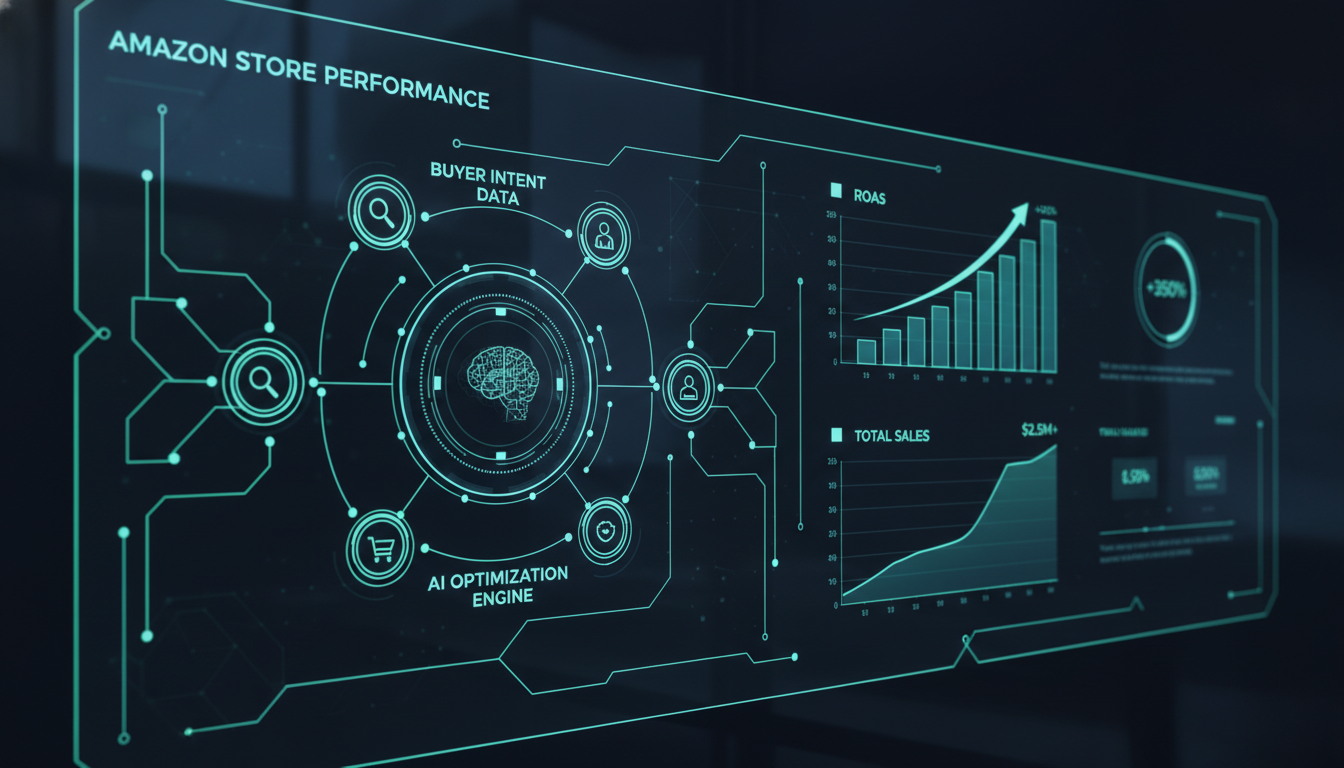
To break through this performance ceiling, modern brands are shifting toward marketing with ai and integrating robust artificial intelligence ads into their standard operations. Moving beyond simple automated rules is essential. By deploying next-generation ai marketing strategies that combine real-time bidding, deep buyer intent intelligence, and dynamic creative automation, sellers can reclaim hundreds of manual management hours while driving their Advertising Cost of Sales (ACoS) down to unprecedented levels. This comprehensive guide outlines the strategic blueprints required to build an unstoppable amazon advertising strategy powered by advanced artificial intelligence.
The Core Limitations of Legacy Amazon PPC Management Tools
Historically, brands relied on legacy amazon ppc management tools to manage their sponsored search campaigns. These platforms generally operate on rigid, rule-based systems. For instance, a seller might configure a rule stating: "If a keyword's ACoS exceeds 35%, lower the bid by 10%." While this approach was revolutionary a decade ago, it is fundamentally reactive and structurally slow in today's high-velocity marketplace.
Rule-based ppc software fails to account for the multi-dimensional complexity of modern Amazon auction dynamics. Bidding auctions fluctuate hourly, influenced by factors such as competitor inventory stockouts, lightning deals, organic rank changes, seasonal trends, and intra-day shopping patterns. A rigid rule might trigger a bid reduction on a key term during a temporary midday conversion drop, accidentally starving a highly profitable keyword of traffic during peak evening hours.
To stay competitive, brands are transitioning to an advanced ai advertising platform that utilizes machine learning. Instead of waiting for historical reports, AI models continuously analyze thousands of performance signals to predict the ideal bid for every single search impression. According to the latest Amazon Ads AI marketing trends for 2025, the integration of generative tools and predictive analytics is reshaping how brands connect with relevant shoppers, shifting the focus from manual maintenance to high-level strategic growth.

Pillar 1: Dynamic Bidding and AI-Powered Bid Optimization
At the center of any high-performing amazon advertising campaign is the bid engine. In manual management, adjusting bids across hundreds of ASINs and thousands of targeted keywords is an impossible task. It often leads to a "set-and-forget" mentality, which wastes ad spend on non-converting terms and causes brands to miss out on high-converting placements.
By leveraging an advanced amazon ppc automation software, brands can deploy a 24/7 Autopilot bid optimization system. This algorithmic process continuously monitors bid outcomes and updates keyword targets in real time. Rather than relying on rigid rules, the AI calculates the probability of conversion for each specific search query, raising bids on terms showing immediate buyer intent and aggressively lowering bids on terms that fail to convert. This is the difference between legacy campaign management tools and true amazon ads automation.
Implementing ai ppc management allows brands to capture incremental sales that manual teams miss. For instance, when a competitor runs out of inventory, an automated amazon ppc tool will instantly detect the drop in competition, adjust bids on shared keywords to capture high-value market share, and scale down spend when organic ranking stabilizes. Utilizing this style of ppc optimization software ensures that every dollar of ad spend is dynamically guided to where it will generate the highest yield.
Pillar 2: Enhancing Precision with Shopper Intent Intelligence
High traffic volumes are meaningless without conversions. A common mistake in Amazon PPC management is bidding blindly on generic search terms that have high search volume but very low purchase intent. To prevent this budget waste, elite sellers use specialized buyer intent data to build highly targeted campaigns.
With Shopper OS buyer intent intelligence, brands can look past simple keyword search volume and analyze real-time buyer behavior patterns. This software tracks conversion trends, customer search journeys, and product-detail-page interactions to isolate high-intent search terms from exploratory queries. This level of insight allows the amazon advertising management system to structure campaigns based on where a shopper is in their purchasing journey.
Integrating intent-driven ai marketing strategies enables brands to preemptively exclude low-performance queries. Instead of waiting for a keyword to generate costly non-converting clicks, the system uses predictive indexing to identify and negate low-intent terms before they drain your budget. This strategy ensures that your marketing with ai initiatives focus ad spend entirely on shoppers who are ready to buy, maximizing efficiency and performance.
Pillar 3: Beating Creative Fatigue with Dynamic Creative Generation
Even the most optimized bid strategy will underperform if the ad creative fails to grab a shopper's attention. With Sponsored Brands, Sponsored Display, and video ads becoming central components of a successful amazon advertising strategy, the demand for high-quality ad creatives has skyrocketed. Manual creative production is slow, expensive, and difficult to scale across complex product catalogs, often leading to creative fatigue and declining click-through rates (CTR).
To overcome this challenge, brands are turning to ai ad creator platforms. Using an advanced AdCreative+ automated creative generator, sellers can turn raw product photos into high-performance lifestyle imagery, banner assets, and ad copy in seconds. These tools analyze existing brand guidelines and customer reviews to generate custom ad designs and persuasive ad copy optimized for Amazon shoppers.
This automated creative trend is transforming the broader digital landscape. A recent Marketing Dive report on Amazon's AI-powered ads agent highlights how automated, full-funnel systems are helping brands launch and optimize highly personalized creatives across streaming TV, display ads, and sponsored placements. Incorporating an ai advertisement generator into your design workflow allows you to A/B test hundreds of ad variations simultaneously, letting the algorithm identify and scale the winning creative combinations.

Pillar 4: Automated Customer Operations and AI Analytics
Achieving profitable scale on Amazon requires a holistic approach that goes beyond managing ad spend. High ACoS and low ROAS are often symptomatic of broader operational bottlenecks, such as slow customer support responses, poor review velocity, or supply chain stockouts. If your operational infrastructure is weak, even the best ai tools for advertising will struggle to keep campaigns profitable.
Integrating intelligent systems like EcomGPT allows brands to automate backend operations, including customer inquiries, negative review tracking, and refund processing. This automation helps maintain high account health scores, which directly impacts organic search rank and overall conversion rates. When backend operations run smoothly, ad managers can focus entirely on high-level strategy and growth.
Additionally, modern sellers need a centralized marketing management platform that provides real-time transparency into "True Profit" per ASIN. Standard metrics like ROAS can often be misleading if they do not account for COGS, shipping fees, storage costs, and return rates. By utilizing marketing analytics ai, brands can accurately evaluate campaign performance against actual net margins. This deep-level insight ensures you are driving profitable sales, rather than just inflating raw revenue figures.
Step-by-Step Guide: Designing an AI-Driven Amazon PPC Optimization Strategy
Transitioning from manual campaign management to a fully automated, AI-driven model requires a structured, step-by-step approach. Follow this blueprint to launch, scale, and optimize your campaigns:
- Establish Your Financial Guardrails: Define your target ACoS, break-even thresholds, and budget limits for each product line. This financial foundation helps guide your amazon ppc automation tool as it scales your bids. Referencing industry guides on understanding advertising cost of sales (ACoS) metrics can help you establish realistic benchmarks based on your profit margins.
- Configure Autopilot Bidding: Connect your seller account to an ai advertising platform and activate continuous bid adjustments. Let the machine learning algorithms manage intra-day auction changes, optimizing your bidding around the clock.
- Automate Search Term Harvesting: Set up dynamic keyword discovery campaigns. Use your AI system to monitor search query reports, automatically graduating high-converting terms into exact match campaigns and negating non-converting keywords to protect your budget.
- Deploy Dynamic Ad Creatives: Use an ai ads generator to quickly design variations of your lifestyle and headline ads. A/B test these creatives across your Sponsored Brands campaigns to maximize CTR and conversion rates.
- Monitor True Profitability: Evaluate your performance using an integrated ad management software. Focus on true profit margins per product rather than vanity ad metrics, adjusting budgets to prioritize your most profitable ASINs.
Analytical Comparison: Manual Agency vs. Legacy PPC Software vs. AI Operating System
To help you choose the best approach for your business, here is a detailed breakdown comparing manual agencies, traditional software tools, and modern AI operating systems:
| Feature / Metric | Manual Agency / Freelancer | Legacy Rule-Based Software | AI-Powered Operating System (AdAstraa) |
|---|---|---|---|
| Bidding Frequency | Manual / Weekly or Daily adjustments | Scheduled rules (once or twice a day) | Continuous 24/7 Autopilot bidding |
| Keyword Mining | Manual spreadsheet exports | Semi-automated harvesting rules | Dynamic predictive intent harvesting |
| Ad Creative Generation | Slow, costly manual design services | None (requires external design assets) | Instant AI creative generation & testing |
| Customer Operations | None (requires dedicated support staff) | None (ad-focused only) | Automated customer support & operations |
| Profitability Insights | Estimated monthly reports | Basic ad-spend-to-sales ratios | Real-time True Profit per ASIN reporting |
Actionable Amazon Advertising Tips for 2025
To maximize the impact of your automated marketing strategy, consider these practical, data-driven tips:
- Protect Your Brand Keywords: Competitors will try to steal your traffic. Use automated bidding to dynamically defend your brand terms, keeping bidding costs low when competition drops.
- Prioritize High-Intent Match Types: While broad match campaigns are useful for keyword discovery, direct your highest budgets toward exact match keywords backed by proven shopper intent data.
- Sync Ads with Inventory Levels: Avoid driving traffic to low-stock listings. Use an automated system that pauses ads when inventory levels drop below a certain threshold to protect your conversion rate and organic rank.
- Continuously Update Creatives: Prevent ad fatigue by refreshing your ad creatives every four to six weeks. Leveraging automated creative tools makes this process fast and cost-effective.
Scale Profitably with AI-Driven Amazon Advertising
The Amazon e-commerce landscape is shifting rapidly. Relying on manual campaign management and outdated spreadsheets will only lead to wasted ad spend, rising ACoS, and missed opportunities. To scale your brand and capture market share, you need to automate your campaigns with predictive intelligence.
By leveraging the AdAstraa AI-powered ad optimization platform, brands can instantly eliminate ad spend waste, automate bidding, and unlock real-time visibility into their true profitability. Don't let manual tasks limit your brand's potential. Harness the power of AI to optimize your campaigns, increase your ROAS, and drive sustainable growth today.