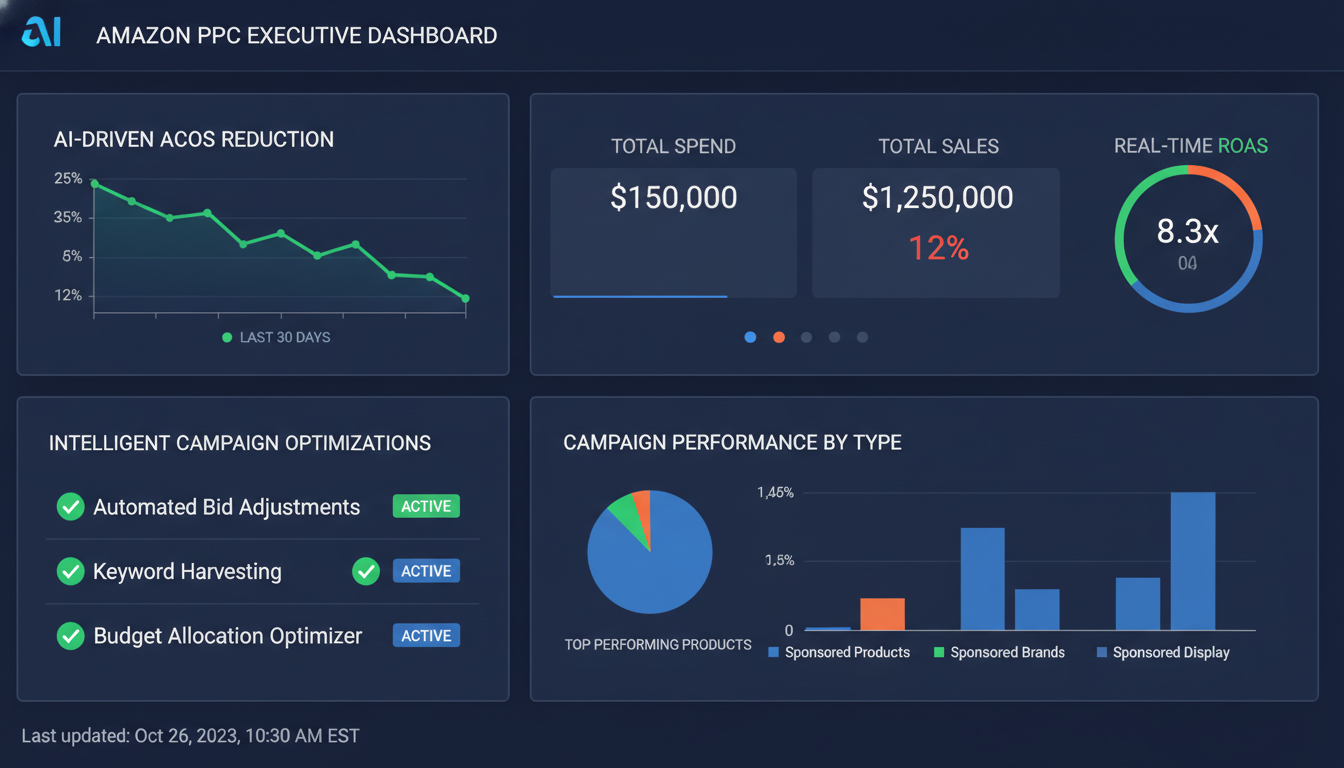
The Paradigm Shift in Amazon PPC Management
For years, managing an amazon advertising campaign felt like a constant battle against an unpredictable, hyper-competitive algorithm. E-commerce brands, digital marketing agencies, and Amazon sellers spent countless manual hours adjusting bids, compiling keyword spreadsheets, and analyzing dynamic search terms. The landscape of amazon ppc advertising has evolved. Traditional, rigid rules-based systems are no longer enough to maintain profitability as CPCs rise and competitor ecosystems grow increasingly complex.
Today, the integration of ai and advertising has fundamentally shifted the benchmark of success. Modern brands are replacing tedious manual workflows with advanced ai advertising tools, transitioning from human-controlled bid adjustments to autonomous marketing workflows. Utilizing marketing with ai allows brands to stop wasting ad spend on low-converting keywords and instead focus on holistic growth and true profitability. By automating complex calculations across thousands of search terms simultaneously, artificial intelligence has redefined the standard for high-performance e-commerce advertising.
To succeed on Amazon today, brands require an all in one advertising platform that goes beyond simplistic automation. Built to solve these precise operational challenges, the AdAstraa AI ad optimization platform provides a powerful operating system designed for Amazon-first brands. By leveraging unified AI models, AdAstraa eliminates wasted spend and improves ROAS across every ASIN. This complete blueprint will explore how to transition your digital storefront from manual management to autonomous, high-yield growth.
The Failure of Rule-Based PPC Software
Before the emergence of true amazon ppc ai, brands relied on early-generation ppc software. These legacy systems operated entirely on rule-based structures, requiring sellers to build rigid conditional models—for example: "If a keyword's ACoS exceeds 40% after 10 clicks, lower the bid by 15%." While this seemed like an improvement over raw manual spreadsheets, rule-based systems suffer from structural limitations that prevent sustained growth:
- Siloed Operations: Traditional ppc software tools isolate bidding data from creative performance and search term intent, creating disconnected, inefficient campaigns.
- Bidding Latency: Manual tools and early ad automation systems update bids once daily or weekly. This latency allows competitors to capitalize on changing market trends, high-converting daytime slots, and seasonal spikes.
- Lack of Real-Time Context: Rule-based software operates strictly on historic data, ignoring buyer behavior, seasonal adjustments, and inventory shifts.
- Keyword Extraction Bottlenecks: Identifying negative search terms and moving high-converting phrases across phrase and exact matches remains a semi-manual task.
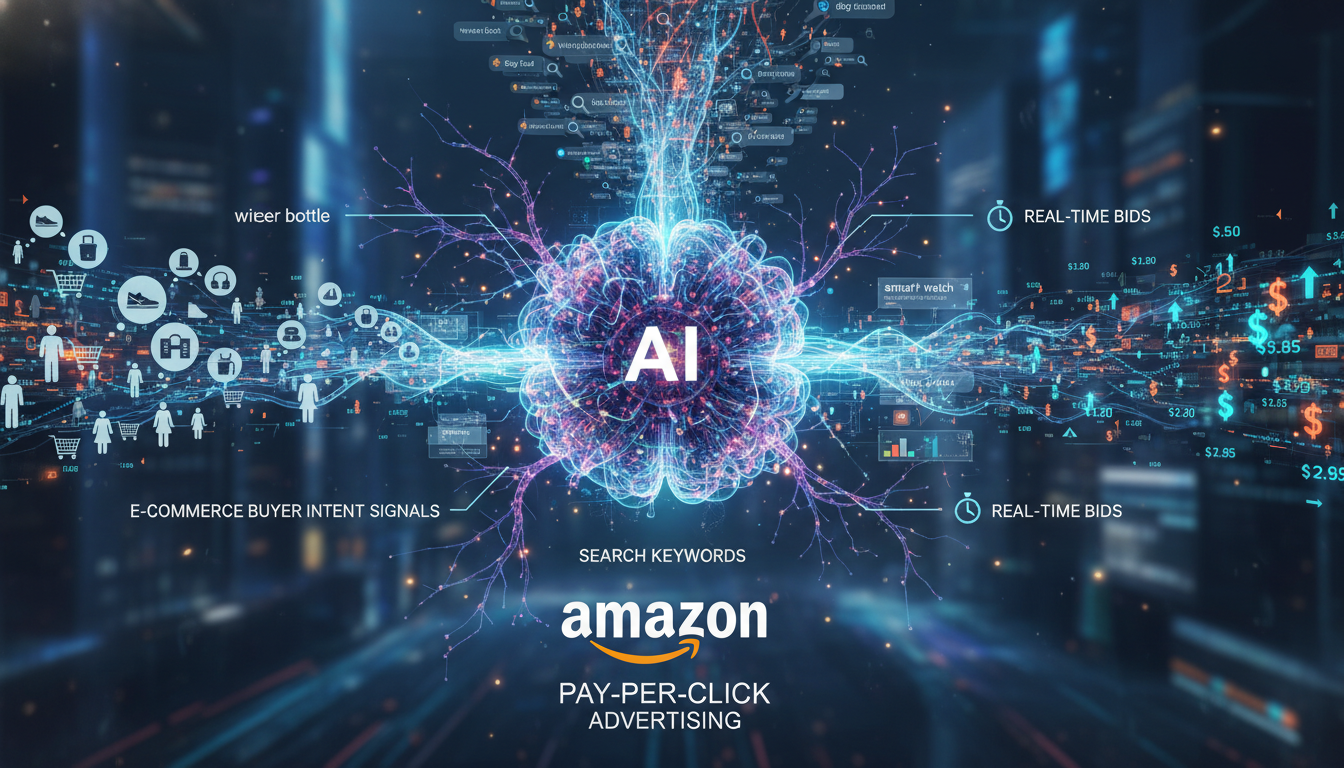
To overcome these legacy limits, modern brands are leveraging marketing automation using ai to transition from static, rule-based logic to predictive machine learning. Rather than waiting for a rule to trigger, predictive algorithms constantly forecast conversion probabilities, adjusting your bids dynamically before wasted spend occurs.
What Is True AI in Ads and How Does It Work?
The term ai advertising is frequently used in industry discussions, but understanding the difference between simple automation and authentic machine learning is essential. Legacy systems use pre-programmed scripts, while true ai based advertising leverages complex mathematical models. These models learn over time, identifying patterns in shopper search history, conversion probability, and competitive density to execute intelligent optimizations.
A true ai advertising platform relies on three key algorithmic pillars:
1. Predictive Bid Optimization
Instead of adjusting bids retroactively, predictive bidding models forecast the conversion rate of a specific click before the auction occurs. The algorithm evaluates historical purchase signals, seasonal trends, dynamic conversion rates, and hourly performance. This predictive capability allows an amazon ppc automation tool to increase bids during high-conversion windows and automatically scale down bids during low-converting hours, maximizing budget efficiency.
2. Dynamic Keyword Harvesting and Negation
Instead of manual search term audits, marketing optimization tools automate the pipeline. The algorithm continuously analyzes search term reports, shifting high-performing terms from broad campaigns directly into exact match groups while applying automatic negatives to wasteful variations, preserving ad capital and lowering your Overall ACoS.
3. Contextual and Buyer Intent Intelligence
True AI software connects on-platform advertising performance with off-platform trends. It factors in stock availability, historical seasonal shifts, organic ranking velocity, and category dynamics, ensuring your amazon advertising campaign responds to shifts in product unit economics rather than just isolated click activity.
The Role of AI-Powered Ad Creative in Modern E-commerce
While bidding optimization is crucial, campaign success is deeply tied to ad creatives. Sponsored Brands, Sponsored Display, and dynamic video ads require continuous testing and refresh cycles. Historically, production stood as an expensive bottleneck, requiring design agencies and weeks of creative iteration.
The rise of the ai ad generator has revolutionized creative scaling. By using an ai ad creator, brands can convert high-resolution product images into dozens of conversion-focused banner ads, lifestyle visuals, and personalized copy variations instantly. This capability allows brands to target distinct audience segments with customized visual cues.
Using high-converting, personalized creative variations across your Sponsored Brand assets increases click-through rates (CTR) and conversion rates, leading to higher ad placements and more favorable bids in Amazon's auction system.
Implementing an ai ads creator like AI-powered ad creative software AdCreative+ allows brands to generate hundreds of high-performing assets in seconds. This eliminates the overhead of expensive studios while ensuring your ad visual inventory matches your ongoing bid strategies and audience testing profiles.
Deep Dive: Core Pillars of Amazon PPC Automation
To successfully automate amazon advertising, brands must understand the underlying structural components that drive high-performance campaigns. The ultimate goal is to connect all channels into a unified system that operates autonomously while remaining focused on profitability.
| Core Capability | Manual Management | Rule-Based PPC Software | AI-Powered Automation (AdAstraa) |
|---|---|---|---|
| Bidding Frequency | Weekly / Bi-weekly manually | Once daily based on rules | 24/7 continuous micro-adjustments |
| Keyword Negation | Manual, slow term audits | Requires complex rule parameters | Instant automated intent negation |
| Creative Optimization | Creative developed by agencies | Static manual testing processes | AI-generated, real-time creative dynamic testing |
| Inventory Synchronization | Manual pausing when out-of-stock | Limited inventory triggers | Autonomous real-time budget redistribution |
| Profit Tracking | Complex external spreadsheet modeling | Revenues, costs, and ACoS only | Direct visibility into True Profit per ASIN |
Maximizing Reach with Advanced Target Harvesting
An effective amazon advertising strategy relies on identifying high-intent search terms before they become hyper-competitive. Standard software targets terms with high search volume, driving up CPCs. An AI-driven amazon campaign optimization tool continuously uncovers long-tail, low-CPC keywords that standard analysis misses. This balances expensive high-competition terms with highly profitable, low-cost customer acquisitions.
Protecting Your Bottom Line with Intent-Driven Intelligence
A common error in amazon pay per click ads management is bidding heavily on terms that generate high traffic but fail to convert. Utilizing intent-based data streams—such as AdAstraa's buyer intent intelligence platform Shopper OS—enables brands to target shoppers displaying strong, transactional buy signals, driving capital efficiency and improving Overall ROAS.
Building a High-ROAS AI Advertising Playbook
Transitioning to an ai advertising platform requires a structured approach to campaign design. Below is a step-by-step roadmap for deploying AI technologies to maximize yield and eliminate wasteful spending.
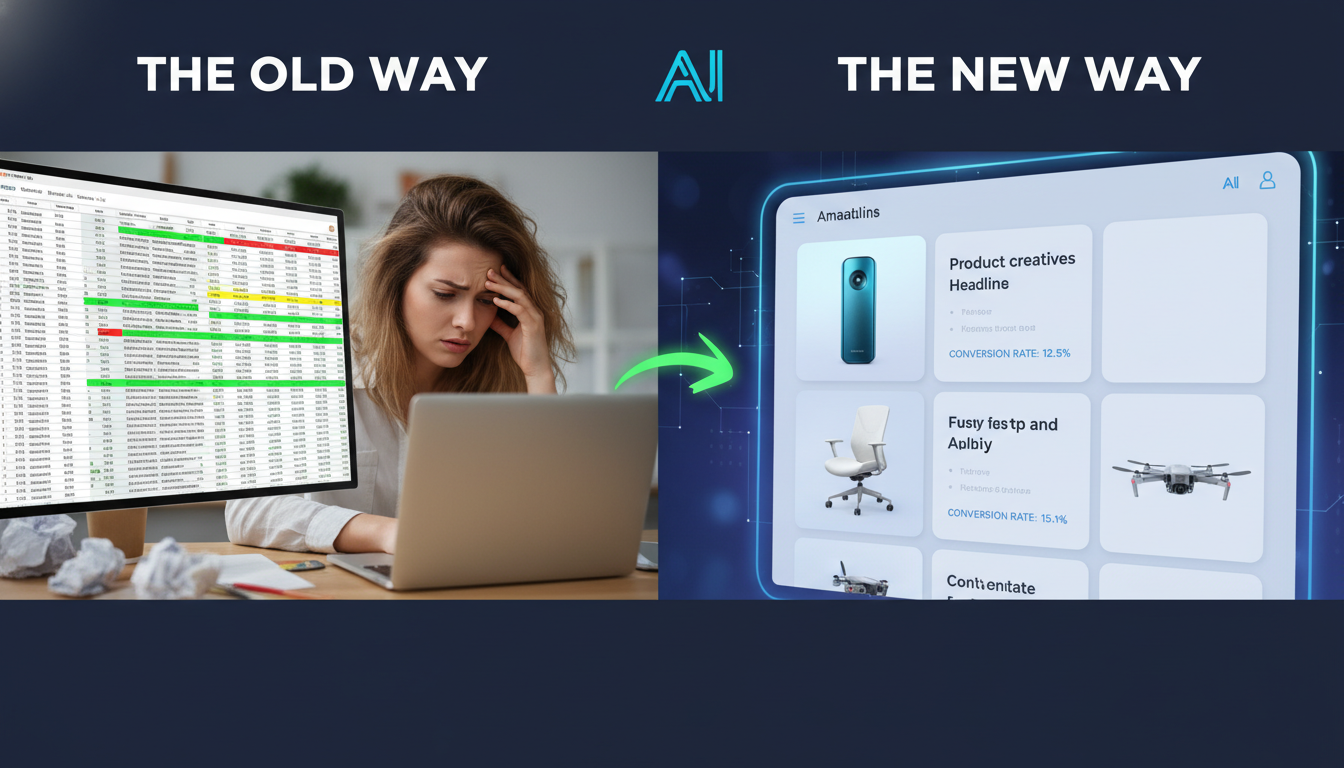
Step 1: Unify Brand and Performance Data
Your AI system is only as powerful as the data it accesses. Begin by connecting your Amazon Seller Central and Vendor Central accounts directly to your marketing management platform. Ensure your dashboard integrates inventory logs, manufacturing costs, historical organic ranks, and shipping fees. This data foundation ensures your bidding software optimizes for true profit margins, rather than just raw revenue or deceptive ACoS metrics.
Step 2: Establish Realistic ROAS and Target ACoS Guardrails
When implementing ai ads automation, specify precise target guardrails for each lifecycle stage of your products:
- Launch Phase: Prioritize maximum sales velocity and organic keyword indexing. Set a higher Target ACoS threshold to establish visibility.
- Growth Phase: Balance market share expansion with margin security, focusing on mid-range Target ACoS parameters.
- Profit Phase: Tighten bidding limits and emphasize high-margin keywords, using aggressive automatic negations to eliminate wasted spend on non-converting terms.
Step 3: Deploy Automated Ad Creative Testing
Develop multiple variations of your creative assets using an ai advertisement generator. Generate distinct product images, contextual lifestyle scenes, and ad copy headlines to run parallel tests inside Sponsored Brands and Sponsored Display campaigns. The algorithms will automatically allocate impressions to the highest-converting variations, increasing click-through rates and lowering CPC overhead.
Step 4: Activate Continuous AI Bidding Optimization
Once your guardrails and creative variations are established, activate your automated bidding systems. The ppc optimization software will analyze competitor pricing, search velocity trends, and purchase patterns to adjust bids in real-time. By implementing 24/7 campaign management, your ads remain optimized across every time zone without manual oversight.
What to Look for in the Best Amazon PPC Software
Choosing an amazon advertising software solution can be challenging, as many platforms claim to use advanced AI when they actually rely on basic rule-based automation. When evaluating solutions, look for platforms that offer these essential, next-generation capabilities:
- Multi-Variable Bidding Algorithms: Avoid platforms that only evaluate target ACoS. Choose an advertising software platform that dynamically balances inventory levels, organic rankings, and SKU-level profitability.
- Unified Creative & Bid Intelligence: Look for systems that integrate creative generation directly with bidding software. This ensures your high-CTR creatives are backed by optimized bidding strategies.
- Accurate Margin Modeling: Avoid tools that only track ad spend. A high-performance ad management software must calculate your COGS, FBA fees, and organic conversions to track your True Profit per ASIN in real-time.
- Agentic Workflow Automation: Look for tools that act as virtual team members, automating bid changes, search term harvesting, and daily reporting pipelines automatically.
The Future of E-commerce Marketing with AI
The pace of innovation in digital advertising is accelerating. Recent research highlights a clear industry trend toward deeper automation. According to a future of AI-powered tools in advertising as detailed by Amazon Ads, brands can now run complex full-funnel marketing campaigns built on predictive models that eliminate traditional operational barriers. This allows sellers of all sizes to focus on product design, catalog selection, and strategic growth.
This evolution points toward a future dominated by autonomous, agentic systems. As highlighted in a recent McKinsey report on agentic AI in marketing and advertising operations, the industry is transitioning from conversational chat tools to self-directing AI agents. These agents can manage complex campaign setups, budget distributions, and competitive responses autonomously, working as tireless digital team members.
For modern Amazon brands, waiting to adopt these technologies is no longer an option. Implementing a unified, intelligent ai software for marketing is essential to scale operations, protect margins, and outperform competitors who still rely on slow, manual processes.
Reclaim Your Time and Scale Profitably with AdAstraa
Managing high-volume Amazon campaigns doesn't have to mean endless spreadsheet tracking and wasted ad budgets. By upgrading to an autonomous, intelligent operating system, you can eliminate manual bidding tasks and start driving high-yield, margin-focused growth.
AdAstraa’s suite of intelligent tools provides everything your brand needs to scale efficiently on Amazon. From 24/7 automated bidding and buyer intent mapping to instant, high-converting creative generation, AdAstraa handles the heavy lifting of campaign management. This gives you clear, real-time visibility into your true profit margins and helps you scale your brand predictably.
Ready to eliminate wasted spend and maximize your ROAS? Visit the AdAstraa AI ad optimization platform today to request a demo and unlock the power of automated, high-margin e-commerce growth.