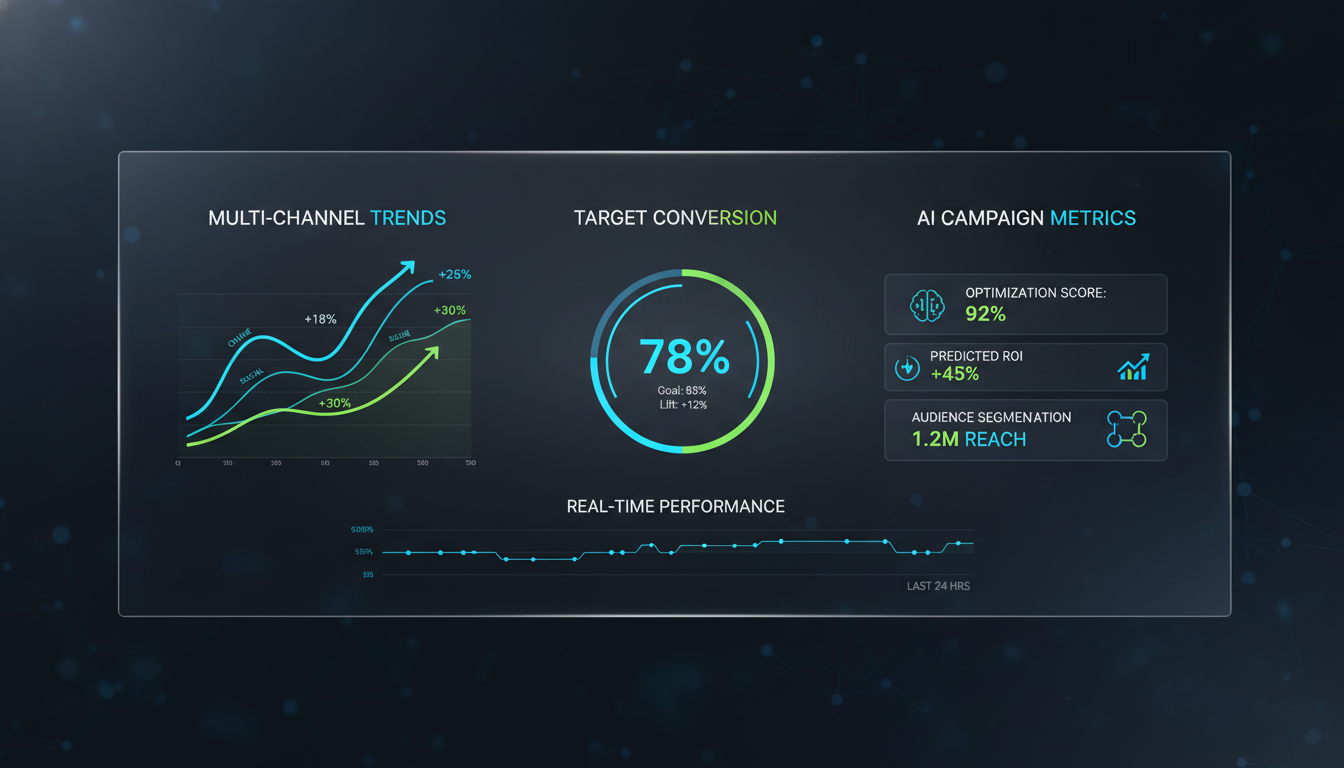
The Blueprint for AI-Driven Amazon PPC Optimization: How Brands Use Machine Learning to Lower ACoS and Scale True Profit
The modern Amazon marketplace has transformed from a straightforward digital storefront into a highly complex, hyper-competitive ecosystem. For brands attempting to scale or simply maintain their market share, relying on manual processes for amazon ppc advertising is no longer a viable long-term option. Year-over-year CPC (cost-per-click) inflation, aggressive competitor strategies, and the sheer volume of search terms have made manual bidding and basic optimization methods obsolete. To thrive, brands must pivot to automated, intelligence-driven campaign architectures.
This comprehensive guide explores the structural mechanics of next-generation amazon ppc optimization. We will examine how forward-thinking brands integrate ai advertising and automation marketing tools to eliminate ad waste, protect margins, and optimize campaigns for bottom-line profit rather than vanity metrics. By transitioning from reactive manual adjustments to proactive, real-time machine learning models, modern e-commerce brands can unlock predictable scale and reclaim hundreds of hours of manual labor.

The Core Friction in Traditional Amazon PPC Management
For years, the standard playbook for running an amazon advertising campaign involved a tedious cycle: exporting search term reports into spreadsheets, manually auditing bids, adjusting targets, and re-uploading bulk files to Seller Central. This manual approach presents several major vulnerabilities:
- The Limits of Human Speed: A human brand manager or PPC agency specialist can realistically adjust bids once or twice a week. In contrast, Amazon's traffic patterns, competitor inventory levels, and conversion rates fluctuate hourly. Manual management leaves brands wide open to overpaying during low-converting hours or losing high-converting placements during peak traffic times.
- Unchecked Keyword Cannibalization: One of the most destructive errors in amazon advertising management is keyword cannibalization. When multiple campaigns (such as Sponsored Products, Sponsored Brands, and Sponsored Display) bid on the same keywords with overlapping match types, brands inadvertently bid against themselves. This artificial internal competition drives up CPCs and erodes profit margins.
- The ACoS Vanity Trap: Traditional reporting focus heavily on Average Cost of Sales (ACoS). However, optimizing exclusively for low ACoS often suppresses sales volume and organic ranking growth. An intelligent brand needs a holistic view of Total Cost of Sales (TACoS) and True Profit per ASIN, which accounts for COGS, returns, and organic lift.
To overcome these challenges, brands are adopting sophisticated AI-powered ad optimization and operating system for Amazon-first brands. These platforms utilize advanced marketing ai software to automatically calculate conversion probabilities, adjust bids dynamically, and restructure campaigns to eliminate internal bidding wars.
Decoding AI Amazon PPC Automation: Rules-Based vs. Machine Learning
Many legacy software solutions market themselves as ppc automation tools or amazon ppc software, yet they rely on basic, rules-based logic. It is critical for brand operators to understand the distinction between rule-based automation and true machine learning models.
Rules-based systems run on static "if-then" commands (e.g., "If ACoS is greater than 35%, lower the bid by 10%"). While this is faster than manual spreadsheet audits, it remains reactive and fundamentally flawed. Static rules fail to recognize intraday trends, seasonal traffic spikes, and search intent nuances. For instance, if an ASIN is experiencing a temporary conversion spike because a direct competitor ran out of stock, a rules-based tool will not recognize the opportunity to bid aggressively on that competitor's keywords until the next daily or weekly reporting cycle—by which time the window has closed.
True amazon ppc ai systems utilize predictive algorithms. They analyze hundreds of variables simultaneously, including hourly conversion-rate (CVR) trends, historical search term performance, current inventory levels, organic ranking positions, and overall market demand. Instead of waiting for historical performance data to accumulate over days, machine learning algorithms continuously calculate bid elasticity, allowing them to adjust bids on an hourly basis to capture high-intent buyers at the lowest possible cost.
| Feature / Capability | Rules-Based Automation | AI & Machine Learning Platform |
|---|---|---|
| Bid Adjustments | Delayed; executed on pre-set hourly or daily intervals based on static rules. | Dynamic and proactive; adjustments made in real time using predictive modeling. |
| Keyword Discovery | Requires manual entry of harvest triggers or basic match-type transitions. | Automated keyword harvesting, semantic grouping, and automated negative targeting. |
| Inventory Integration | None; bids remain high even if stock levels are critically low. | Fully integrated; automatically throttles ad spend when inventory levels decline to protect margins. |
| Keyword Overlap Protection | Poor; does not detect when different campaigns target identical search phrases. | Advanced; continuously scans and restricts bids to prevent self-bidding and high CPCs. |
The Architecture of True Profit: Shifting from ACoS to Contribution Margin
Many brands measure their success on Amazon by looking at ad-attributed metrics. While managing ACoS is helpful, it represents an incomplete picture. A low ACoS on branded search terms can obscure massive waste on non-branded keywords. Conversely, a high ACoS on category keywords might be highly profitable because those ad conversions drive organic search ranking, which in turn generates high-margin organic sales over time.
To scale profitably, brands must shift to a "True Profit" framework. An intelligent marketing management platform acts as an operating system that ties ad spend directly to product-level profitability. This means pulling in diverse data streams—including FBA fees, product COGS, promotional discounts, returns, and storage costs—to calculate the exact margin contribution of every single ad dollar spent.
Through marketing analytics ai, systems can evaluate which keywords are driving incremental customer acquisition versus those that are merely cannibalizing organic sales. If a customer is already highly likely to purchase your product organically, bidding aggressively on your own exact brand name may result in low ACoS but zero incremental value. An advanced amazon ppc tool powered by machine learning detects these patterns and dynamically redistributes ad budget toward keywords that drive true incremental growth.
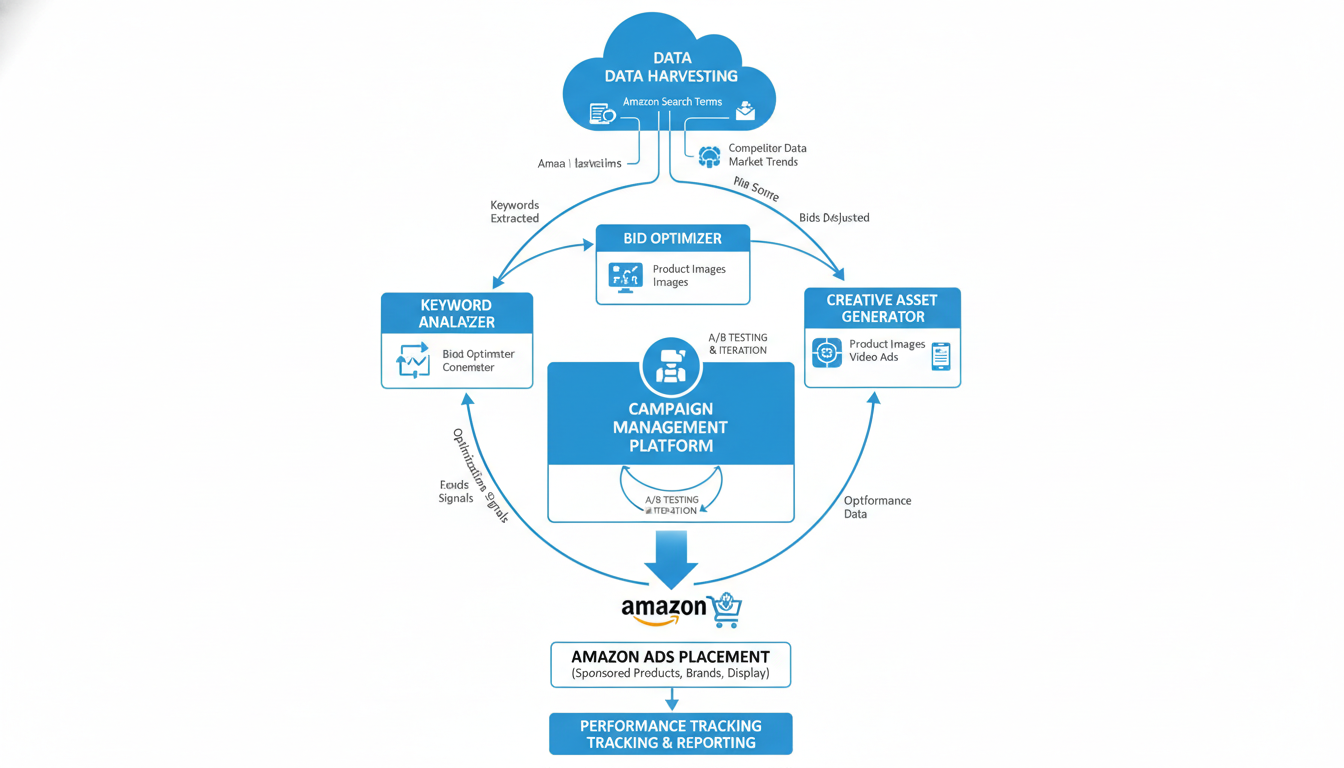
The Core AI Pillars of Modern Amazon Ad Operations
To run a highly effective and modern amazon advertising strategy, brands must look beyond simple bid-adjusting software and embrace an all-in-one advertising platform. Modern Amazon ad operations rely on four foundational AI pillars:
1. Automated Bid Management (The Autopilot Engine)
The core of any advanced amazon ppc automation software is its automated bid engine. Instead of manual adjustments, the engine analyzes conversion rates on a micro-level. By understanding bid elasticity—how changes in bid price impact click volume and conversion likelihood—the autopilot engine identifies the "sweet spot" bid for every keyword. This process significantly reduces wasted ad spend on non-converting clicks, lowers ACoS, and boosts overall return on ad spend (ROAS).
2. Buyer Intent Intelligence
Not all search queries carry the same transactional value. A shopper searching for "protein powder organic" has a much higher purchase intent than someone searching for "protein shakes info." Utilizing a sophisticated intent engine, such as AdAstraa's Shopper OS buyer intent engine, allows brands to categorize search terms by buyer intent stage. By matching bid aggressiveness to intent levels, brands avoid overpaying for broad discovery keywords while locking down top-of-search placements for high-converting, high-intent queries.
3. AI-Powered Creative Generation
Modern Amazon ads are highly visual. With the expansion of Sponsored Brands, Sponsored Display, and Sponsored Video formats, creative assets play an increasingly vital role in ad performance. Creative fatigue is a common issue; running the same images or videos for too long leads to declining click-through rates. Leveraging an ai ad generator or ai powered ad creative platform allows brands to produce hundreds of high-quality variations instantly. Using tools like AdAstraa’s AdCreative+ suite, brands can generate campaign-ready lifestyles, product backdrops, and video assets that match shopper demographics and seasonal trends dynamically, drastically reducing visual asset production costs.
4. Automated Operations & Workflow Streamlining
Beyond bidding and creative, managing a large catalog requires significant operational overhead. Brand managers spend hours writing customer follow-ups, managing review generation, and tracking logistics. Integrating automated marketing workflow systems frees up strategic resources, allowing teams to focus on product development and inventory management instead of administrative tasks.
Combating the Silent Profit Killer: Keyword Cannibalization
Keyword cannibalization occurs when a brand targets the same keyword across multiple ad groups or campaigns, forcing their ads to compete against one another in Amazon's auction system. This duplication driving up CPCs is a silent leak that degrades overall profitability. For example, if you run a broad match campaign, a phrase match campaign, and an exact match campaign for the same target without proper negative structures, Amazon's algorithm may serve ads from multiple campaigns, inflating the bids needed to win the placement.
To resolve this issue, brands must establish strict campaign hygiene. This is where ppc optimization software excels. True ai ppc management tools automatically apply negative keywords across overlapping campaigns in real time. For instance, when an auto campaign identifies a high-converting search term, the AI immediately "harvests" that keyword, moves it into an exact match campaign for maximum bidding control, and simultaneously adds it as a negative keyword in the original auto campaign. This automated separation ensures that every dollar in your ad budget is directed toward unique search placements, eliminating bid duplication and keeping CPCs stable.
Integrating Amazon Marketing Cloud (AMC) and Generative AI
The future of marketing with ai on Amazon is heavily tied to advanced data-driven attribution models. Amazon Marketing Cloud (AMC) has emerged as an incredibly powerful resource, allowing brands to analyze complex multi-touch shopper journeys across Sponsored Products, Sponsored Brands, Sponsored Display, and Amazon DSP.
Historically, querying AMC required advanced SQL knowledge, creating a major barrier for standard marketing teams. However, Amazon has bridged this gap by introducing sophisticated generative AI capabilities. As highlighted in Amazon Ads' official AMC SQL generator and generative AI announcement, brands can now query deep data patterns using plain-text natural language. This development makes multi-touch attribution analysis accessible to brands of all sizes.
In addition, developments outlined in Amazon Ads' 2025 AI marketing trends highlight how machine learning is being democratized across creative development and targeting. Generative AI allows advertisers to create dynamic, rich lifestyle videos and custom lifestyle imagery on the fly, directly lowering the entry barrier for small-to-midsize brands. By feeding AMC data into an ai advertising platform, advertisers can instantly identify which creative variations yield the highest customer lifetime value (LTV) and automatically adjust bidding strategies to target those high-value shoppers.
A Step-by-Step Transition to AI Amazon PPC Automation
If your brand is currently managing its advertising manually or through simple rule-based templates, transitioning to true amazon ppc automation can seem daunting. To ensure a smooth, risk-free transition, follow this strategic roadmap:
- Audit Your Account Health & Structure: Before activating any amazon ppc automation tool, your existing campaigns must have logical structure. Ensure your ASINs are grouped by logical variation types and that there is a clean distinction between auto, research (broad/phrase), and performance (exact) campaigns. Proper campaign hygiene prevents the AI from inheriting chaotic keyword conflicts.
- Establish Clear Target Metrics: AI models require clearly defined optimization targets. Determine your target ACoS, your ideal TACoS, and your budget limits for each product grouping. For instance, mature products may be optimized for low ACoS and cash flow, whereas newly launched products should target aggressive keyword ranking and market share, allowing for higher temporary ACoS.
- Initialize Autopilot Gradually: Do not automate your entire portfolio overnight. Begin by onboarding your top-performing 20% of ASINs. This allows you to monitor how the machine learning algorithms adjust bids and discover keywords, giving your team time to build trust in the automated bid adjustments.
- Implement Automated Negative Harvesting: Configure your ppc automation software to continuously scan search query reports. Set clear rules for negative targeting (e.g., automatically add a search term as a negative if it receives more than 15 clicks with zero conversions). This instantly stops budget leaks on irrelevant search terms.
- Analyze True Profit and Refine: Review your performance metrics weekly using a profit-focused dashboard. Monitor your organic keyword rankings alongside your ad performance. If your AI automation is operating correctly, you should see your TACoS decrease and your overall contribution margin per ASIN improve, even if your nominal ad-attributed ACoS remains steady.
The Strategic Outlook: Embracing AI to Secure Your Brand's Future
The era of manual Amazon PPC management is drawing to a close. As competitor brands increasingly adopt ai marketing strategies and automated campaign management tools, human-only optimization is no longer competitive. Attempting to manually balance thousands of keyword bids, adjust placements based on dynamic intraday trends, and generate compelling creative variations is an inefficient use of resources.
By implementing a robust, machine learning-driven amazon advertising platform, brands can transform their ad spend from an unpredictable expense into a precise, scaleable profit engine. Automation eliminates human error, reduces wasted ad spend, protects product margins, and provides actionable insights in real time. For brands focused on long-term growth, integrating AI into their advertising workflow is not just an operational upgrade—it is a strategic necessity to survive and dominate on Amazon.