Amazon brands today face an unprecedented, hyper-competitive landscape. With over 9.7 million sellers globally and advertising real estate shrinking, cost-per-click (CPC) metrics are climbing at double-digit rates year-over-year. The harsh reality? Amazon brands waste up to 30% of their ad budgets on search terms that never convert. Relying on manual campaign management is no longer just exhausting; it is a direct leak in your company's balance sheet.
To survive and thrive, top-performing brands are migrating away from tedious manual bid sheets and embracing modern automation. By choosing to automate Amazon advertising, modern e-commerce brands are scaling operations, cutting down waste, and maximizing their true profits. This comprehensive, step-by-step guide reveals the exact strategies, software models, and machine-learning frameworks required to take back your time and scale your ROAS to new heights.
Take Control of Your Ad Spend Instantly
Stop losing margins to inefficient manual bidding. Let AdAstraa's Autopilot manage your bids 24/7 with razor-sharp precision.
Book a Free Strategy Call Today →Table of Contents
- Why Manual Amazon PPC Management is Failing D2C Brands
- 9 Game-Changing Strategies to Automate Amazon Advertising
- 1. Real-Time Dynamic Bid Adjustment (Autopilot 24/7)
- 2. Automated Keyword Harvesting
- 3. Machine Learning Negative Keyword Management
- 4. Dayparting Optimization and Hour-by-Hour Targeting
- 5. AI-Powered Creative Testing and Asset Generation
- 6. Buyer Intent Intelligence
- 7. Cross-Campaign Budget Reallocation
- 8. Automated Competitor Conquesting Campaigns
- 9. True Profit and ASIN-Level Financial Visibility
- Case Study: How Zenith Nutrition Slashed ACoS by 35%
- Rules-Based vs. Machine Learning PPC Software: The Ultimate Comparison
- Your Step-by-Step Transition Guide to Automated PPC
- Additional Resources
Why Manual Amazon PPC Management is Failing D2C Brands
For years, managing an Amazon advertising campaign meant downloading bulk sheets from Seller Central, applying basic formulas in Excel, and re-uploading the bids every few days. This slow process was acceptable when competition was low. Today, it is a recipe for financial ruin.
The Rising CPC Crisis on Amazon
As more capital-backed aggregators and legacy consumer packaged goods (FMCG) brands flood the Amazon marketplace, the cost-per-click (CPC) for high-traffic terms has reached historic highs. In competitive niches like supplements, beauty, and consumer electronics, a single click can cost upwards of $5 to $10. When conversion rates hover around 10%, a brand must spend $50 to $100 just to acquire a single customer. If your bidding system isn't optimized to the penny, rising CPCs will quickly erode your profit margins.
Human Limitations and Bidding Fatigue
The human brain is simply not equipped to monitor thousands of keyword bids across dozens of ASINs simultaneously. A typical catalog with 20 parent ASINs can easily generate thousands of active targets across Sponsored Products, Sponsored Brands, and Sponsored Display ads. Because human ad managers suffer from operational fatigue, they can only perform bid adjustments once or twice a week. In contrast, Amazon's auction operates 24/7. While you are sleeping, competitor algorithms are constantly updating their bids, capturing your market share, and driving up your costs. To stay competitive, you need automation marketing tools that react instantly to market fluctuations.
9 Game-Changing Strategies to Automate Amazon Advertising
Implementing a comprehensive automation framework is the only way to safeguard your margins while scaling sales. Here are the nine essential and proven strategies that high-growth brands use to automate their marketing and advertising workflows.
1. Real-Time Dynamic Bid Adjustment (Autopilot 24/7)
Standard bidding platforms utilize static, backward-looking rules to manage bids. For example, a rule might state: "If ACoS is above 40%, lower the bid by 10%." While this simple adjustment helps, it fails to account for market dynamics. True machine-learning automation models predict future conversion probability in real-time. By tracking factors like inventory levels, seasonality, historical conversion hourly patterns, and competitor pricing, a modern ai advertising platform can instantly adjust bids up or down to ensure you never overpay for a click or lose a high-value sale.
2. Automated Keyword Harvesting and Search Term Isolation
Keyword research is an ongoing battle. New buyer search terms emerge daily, and manual research is too slow to capture them. Automated systems solve this by continuously scanning search term reports from auto, broad, and phrase match campaigns. When the algorithm identifies a search term that meets your pre-defined conversion threshold (e.g., three sales with an ACoS under 30%), it automatically harvests that keyword, promotes it to an exact match campaign, and bids on it. This ensures you capture new search volume ahead of your competitors, making it a cornerstone of any modern amazon advertising strategy.
3. Machine Learning Negative Keyword Management
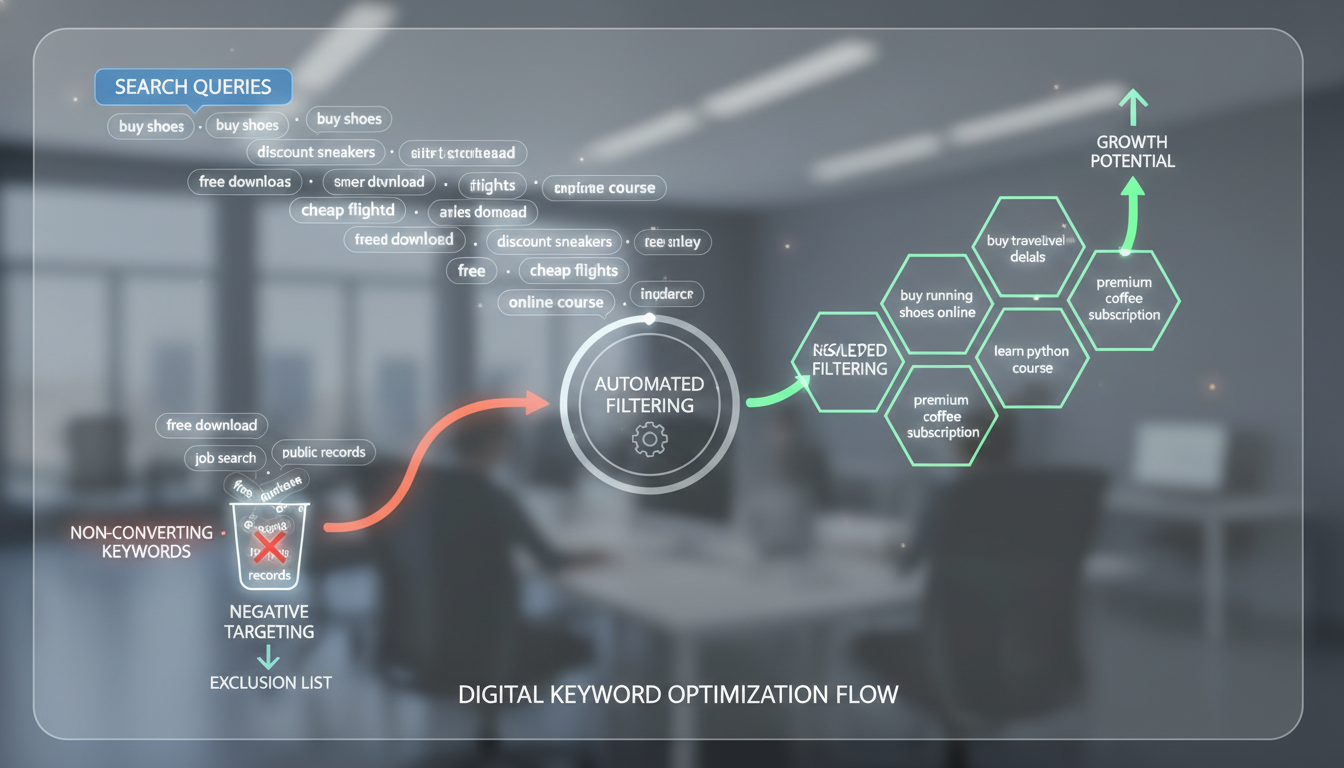
Just as important as finding winning keywords is eliminating the losers. Non-converting clicks are the primary cause of inflated ACoS. If a search term generates 10 clicks without a single purchase, it has a 0% conversion rate and is wasting your budget. An automated platform instantly adds these underperforming terms as negative exact matches across all relevant campaigns. This automated negative isolation process keeps your budget focused entirely on high-converting traffic, immediately lowering your advertising costs.
4. Dayparting Optimization and Hour-by-Hour Targeting
Consumer buying habits shift dramatically throughout the day. A supplement brand might see search volume spike at 7:00 AM, but conversion rates peak at 8:00 PM when shoppers are relaxed at home. Bidding the same amount at noon as you do at 8:00 PM is highly inefficient. Automated dayparting utilizes machine learning to map out your conversion profile hour-by-hour. The software automatically lowers bids during low-converting hours and raises them during peak hours, ensuring your budget is spent when buyer intent is highest.
5. AI-Powered Creative Testing and Asset Generation
An advertising campaign is only as strong as its creative assets. However, manually designing and testing hundreds of lifestyle images, custom banners, and video assets is incredibly time-consuming. Using an integrated AI-powered ad creative engine, brands can generate and split-test dozens of high-impact ad variations simultaneously. The algorithm automatically tracks CTR and conversion metrics, shifting budget toward the winning creative elements and phasing out low-performing designs without requiring human intervention.
6. Buyer Intent Intelligence
Not all traffic on Amazon is equal. Some searchers are merely researching, while others have their credit cards out, ready to buy. True automated platforms integrate deep buyer intent intelligence. By tracking search histories, browse behaviors, and category-level data, the AI identifies high-intent shoppers and allocates higher bid adjustments to placements most likely to win their business. This precise audience targeting dramatically increases conversion rates and boosts overall campaign efficiency.
Discover the Power of Intent-Driven Ads
Are you ready to target shoppers who are actively looking for your products? See how AdAstraa's Shopper OS can scale your revenue starting today.
Explore Shopper OS →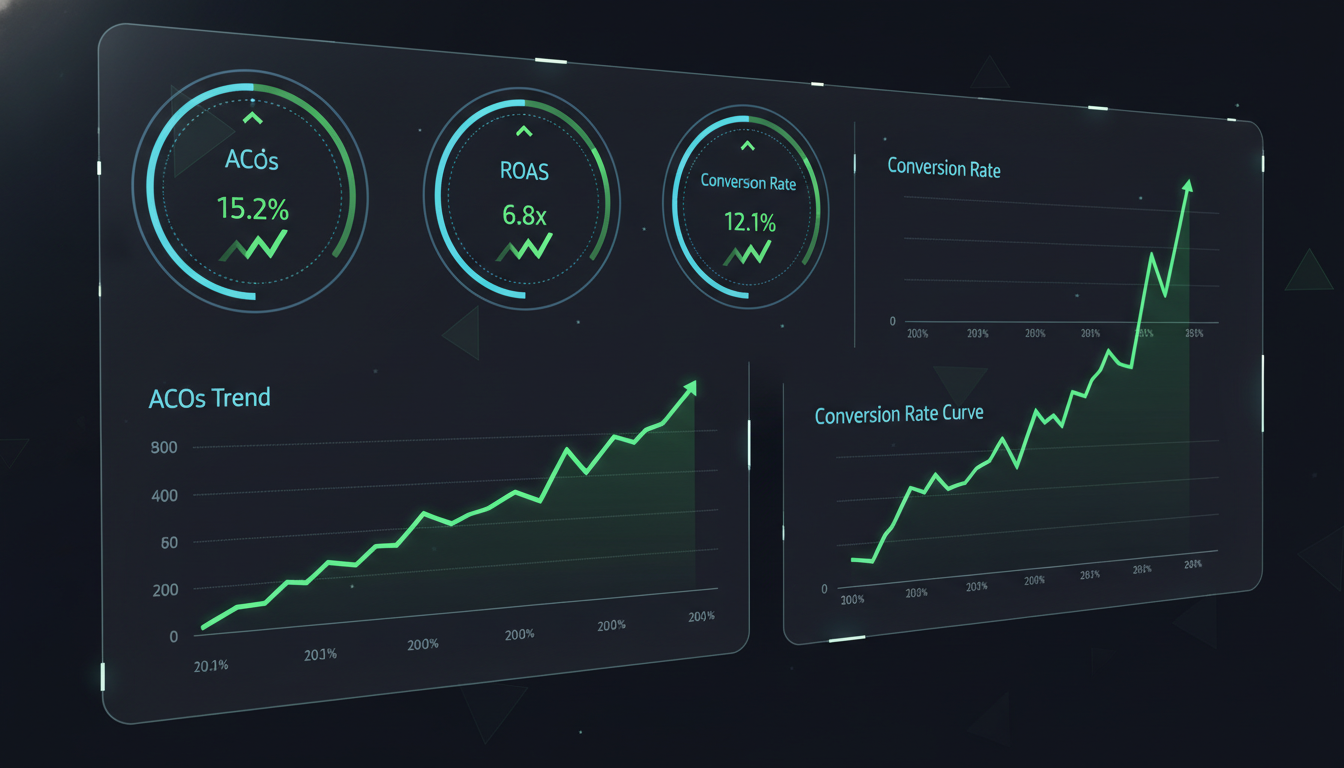
7. Cross-Campaign Budget Reallocation and Buffer Management
One of the most frustrating occurrences for an Amazon seller is seeing a highly profitable campaign stop running at 2:00 PM because it ran out of budget. Conversely, you might have legacy campaigns with large, unused daily budgets. Automation software continuously monitors campaign-level spending. If a high-performing campaign approaches its daily budget cap, the software instantly reallocates unused funds from underperforming campaigns. This guarantees continuous visibility for your best-converting keywords without increasing your overall daily ad spend.
8. Automated Competitor Conquesting Campaigns
Defending your brand space and conquesting your competitors is critical on Amazon. However, manually tracking competitor price changes, review drops, or out-of-stock events to trigger bid changes is impossible. Advanced marketing automation tools continuously monitor competitor listings. If a key competitor goes out of stock or raises their price, the AI instantly triggers aggressive bids on their branded keywords, capturing their high-intent traffic when they are most vulnerable.
9. True Profit and ASIN-Level Financial Visibility
Advertising metrics like ACoS and ROAS can sometimes be misleading. A campaign can show a great ACoS on paper, but when you factor in Amazon FBA fees, product manufacturing costs, shipping, and returns, that ASIN might actually be losing money. Advanced marketing analytics AI solves this by integrating with your entire financial stack. By calculating your true net profit per ASIN in real-time, the platform automatically scales back ad spend on unprofitable products and reallocates budget to your most lucrative items, protecting your business's bottom line.
Case Study: How Zenith Nutrition Slashed ACoS by 35% and Reclaimed 15 Hours Weekly
To understand the game-changing impact of automated Amazon PPC campaigns, let us look at a real-world example. Zenith Nutrition, a premium health and wellness brand with 45 active SKUs, was struggling to manage its rising ad spend in a highly saturated category.
The brand's primary pain points were common to many fast-growing e-commerce sellers:
- Their in-house marketing manager spent over 15 hours every week manually adjusting bids in Excel.
- Despite this massive effort, their average ACoS hovered around 48%, leaving them with virtually no profit margin.
- High-converting campaigns frequently ran out of budget by mid-afternoon, causing them to miss peak evening shopping hours.
To solve these issues, Zenith Nutrition integrated AdAstraa's comprehensive AI suite, activating Autopilot bid management, dynamic keyword harvesting, and shopper intent targeting. The results after 90 days of automated operation speak for themselves:
| Metric Measured | Manual Management (Before) | AdAstraa AI Automation (After) | Overall Improvement |
|---|---|---|---|
| Monthly Ad Spend | $42,000 | $38,000 | -9.5% (Wasted Spend Eliminated) |
| Monthly Ad Revenue | $87,500 | $135,700 | +55.1% |
| Average ACoS | 48.0% | 28.0% | -20.0% (Absolute ACoS Drop) |
| Average ROAS | 2.08x | 3.57x | +71.6% |
| Weekly Management Hours | 15 Hours | 0.5 Hours | 96.6% Time Saved |
By automating their marketing workflows and leveraging breakthrough machine learning, Zenith Nutrition not only saved hours of tedious labor every week but also successfully scaled their sales volume while drastically improving profitability. Read more brand success stories to discover how other leading e-commerce companies are achieving similar growth.
Rules-Based vs. Machine Learning PPC Software: The Ultimate Comparison
When selecting a software partner, it is vital to understand that not all amazon ppc automation tools are built equal. Most legacy software platforms on the market rely on rules-based bidding structures, which can actually harm your campaign performance over time.
The Core Flaw of Simple If-Then Rules
Rules-based software functions on rigid, user-defined statements, such as: "If CPC is above $2.00, lower the bid by 15%." While this appears helpful, it does not account for nuance. For example, if a high-priced product has an exceptionally high conversion rate on a specific day, a $2.50 CPC might actually be incredibly profitable. A rules-based tool will blindly slash the bid anyway, starving your best-converting listing of precious traffic and visibility. These legacy systems require constant human adjustment to keep the rules relevant, defeating the entire purpose of automation.
Why Neural Networks Win the Amazon Bidding War
True machine-learning ad platforms utilize neural networks and deep data sets to make predictive, multi-variant decisions. Instead of looking at a single metric like ACoS, an AI-powered system analyzes thousands of data points simultaneously, including conversion rate history, competitor pricing, review velocity, search volume, click history, and even category trends. This allows the software to adjust bids in real-time based on the probability of a sale, rather than a rigid, outdated rule. This predictive bidding engine is the key to running highly efficient, automated Amazon advertising campaigns.
Your Step-by-Step Transition Guide to Automated PPC
Transitioning from manual campaign management to full marketing workflow automation does not have to be overwhelming. By following this step-by-step framework, you can smoothly hand over your campaigns to AI while maintaining complete control over your brand strategy.
- Audit Your Current Campaigns: Before activating any automation, review your active keyword lists and campaign structures. Group your products into logical portfolios based on margins and sales goals.
- Establish Clear Guardrails: Modern platforms are not black boxes; they require clear boundaries. Set maximum daily budgets, target ACoS limits, and target ROAS goals for each of your portfolios. These parameters act as a guaranteed safety net, ensuring the AI never overspends.
- Connect the Amazon API: Authorize your chosen automation software to access your Amazon Advertising API. This secure connection allows the tool to read data and adjust bids instantly.
- Start in Learning Mode: Allow the AI system to run quietly in "read-only" or "learning" mode for 7 to 14 days. This gives the algorithms time to ingest your historical performance data and build precise buyer intent profiles.
- Activate Autopilot Gradually: Begin by activating automated bidding and keyword harvesting on a single product portfolio or your top-selling ASINs. Once you see the positive impact on conversion rates and profit margins, expand the automation to your entire catalog.
- Leverage Customer Support Ops: Boost your organic conversion rates by integrating automated customer operations. Faster customer support leads to better product reviews, directly raising your overall conversion rates and improving your return on ad spend.
Additional Resources
- Harvard Business Review: How to Design an AI Marketing Strategy — An in-depth analysis of integrating artificial intelligence into enterprise marketing workflows.
- Amazon Ads: Guides and Resources — The official documentation from Amazon detailing advertising strategies, formats, and API configurations.
- MIT Sloan Management Review: Optimizing Digital Advertising with AI — Research-backed insights into how neural networks and machine learning improve targeting efficiency.
Stop Wasting Ad Spend. Reclaim Your Time Today.
Join the elite Amazon-first brands utilizing AdAstraa's powerful suite of AI tools to lower ACoS and skyrocket bottom-line profitability.
Book Your Free Ad Audit →