
Imagine waking up to find that your best-performing Amazon product campaigns spent their entire daily budget before 9:00 AM on keywords that didn’t convert a single unit. Meanwhile, during peak shopping hours when customer buying intent was highest, your listings were invisible because your ad campaign was out of budget. For Amazon D2C sellers and FMCG brands, this nightmare is an everyday reality under manual ad management. In a hyper-competitive retail environment where bid costs rise by double digits annually, attempting to manually manage thousands of targets, campaigns, and ad variations is a guaranteed recipe for bleeding profit margins.
With millions of active sellers, Amazon has become an auction-driven battlefield where speed, accuracy, and efficiency dictate success. Attempting to manage bids, design ad creatives, harvest keywords, and analyze customer intent manually is like bringing a knife to a laser fight. The sheer volume of data points is humanly impossible to process. A single product detail page can trigger ads across hundreds of keywords, multiple match types, and several dynamic placements. If you are still relying on spreadsheets and manual adjustments, you are leaving money on the table every single second of the day.
The good news? The rise of automated ads and sophisticated machine learning tools is rewriting the rules of Amazon advertising campaigns. Today, the most successful brands don't manually tweak bids at midnight. Instead, they deploy an all-in-one advertising platform built on machine learning to handle micro-bids, target discovery, and creative generation 24 hours a day, 7 days a week.
In this deep-dive guide, we will break down the essential strategies to step away from repetitive management tasks and scale your brand with cutting-edge Amazon advertising software.
Is Your Ad Spend Slipping Through the Cracks?
Instantly discover non-converting keywords and reclaim wasted spend. Let AdAstraa's AI-driven system boost your margins today.
Request Your Free Ad AuditTable of Contents
The Paradigm Shift: Why Manual Bidding is Eating Your Profit Margin
For years, Amazon seller operations relied heavily on rules-based scripts. These primitive systems executed basic commands like "If ACoS is above 40%, lower the bid by 10%." While this was a massive step forward from manual CSV uploads, rules-based marketing automation using ai is a fundamentally different beast.
Rules-based software is inherently reactive. It waits for damage to occur before attempting a fix. If a competitor launches a massive coupon promotion, or an influencer post suddenly spikes traffic on a Tuesday afternoon, rules-based tools miss the window of opportunity entirely. Conversely, modern marketing ai software acts proactively, predicting conversion trends based on millions of real-time data points. Instead of waiting for a high-cost keyword to bleed your budget over a week, the artificial intelligence ads system identifies conversion drops within hours and adjusts bids in real time.
Furthermore, managing campaigns across Sponsored Products, Sponsored Brands, and Sponsored Display requires an unprecedented level of alignment. If you're utilizing separate ppc optimization software for bids and different creative tools for assets, your data sits in isolated silos. By integrating an all in one advertising platform, brands can easily synchronize their entire campaign ecosystem. When your bid software communicates instantly with your inventory metrics and buyer intent data, you eliminate the risk of advertising out-of-stock items, ensuring every dollar spent works toward maximum profitability. This connected approach represents the next generation of amazon advertising management, allowing brands to protect margins and scale rapidly without human bottlenecking.
9 Breakthrough Amazon PPC Automation Tips to Skyrocket ROAS
1. Unleash 24/7 Autopilot Dayparting and Micro-Bidding
The ultimate secret to optimizing your Amazon pay per click ads lies in understanding customer behavior patterns throughout the day. Traditional bid adjustments are made on a daily or weekly basis, treating a click at 3:00 AM the same as a click at 8:00 PM. In reality, conversion rates fluctuate wildly based on the hour. During working hours or late evening shopping blocks, customer intent is at its highest, meaning conversion rates are strong. Conversely, during late-night hours, clicks are often window-shoppers or accidental mobile clicks, resulting in a high bounce rate and wasted spend.
By adopting a robust amazon ppc automation software, you can implement dayparting at a hyper-granular level. An intelligent platform analyzes your historical performance to identify your brand's highest-converting windows. It then automates bid adjustments on a rolling hourly basis. This micro-bidding prevents your campaigns from exhausting budgets during low-intent early morning hours, reserving capital for high-volume evening peaks when shoppers are primed to purchase. This systematic shift instantly stabilizes your daily budgets and drastically lowers ACoS. With continuous, round-the-clock bid adjustments, your brand remains highly visible when it matters most, driving exceptional conversion velocity and securing market share without overpaying.
2. Isolate High-Intent Buyers with Advanced Intent Intelligence
Understanding human intent is the holy grail of modern digital commerce. Too often, sellers bid aggressively on high-volume, generic keywords that fail to yield a positive return on investment. This is where a game-changing tool like the Shopper OS buyer intent platform proves essential.
By monitoring buyer intent metrics directly, the software filters out low-converting search terms and focuses spending on prospects with high purchase probability. Instead of casting a wide, expensive net across generic phrases, intent intelligence targets shoppers who have shown deep interest in your category. When combined with advanced AI ads capabilities, this ensures your budgets are concentrated strictly on high-yield opportunities, making your Amazon advertising campaign highly precise and cost-effective. By filtering out non-converting traffic, you're not just buying clicks; you're acquiring high-converting customers, ensuring your marketing dollars work as hard as possible to scale your margins.

3. Harness Automated Keyword Harvesting and Pruning
Manually sifting through search term reports to identify new keyword targets is an incredibly tedious, error-prone task. An advanced ppc automation software transforms this nightmare into an effortless, hands-off workflow.
The software continuously scans search term data across automatic campaigns, identifying terms that meet your predetermined conversion thresholds. It then automatically graduates these search terms into broad, phrase, or exact match campaigns. Simultaneously, the platform identifies underperforming search terms that consume budget without converting and adds them as negative matches. This continuous cycle of automated keyword harvesting and pruning keeps your Amazon ppc software streamlined and free of wasted ad spend. Over time, this recursive refinement ensures that your campaigns are always testing fresh, high-yield search terms while immediately shutting down money pits.
4. Deploy Dynamic AI-Powered Creative Variants
Creative assets have quickly become one of the primary drivers of ad click-through rates (CTR) and conversion rates. However, designing high-impact visual banners and custom video ads is highly resource-intensive. Leveraging a state-of-the-art AdCreative+ generator is the definitive shortcut to solving this problem.
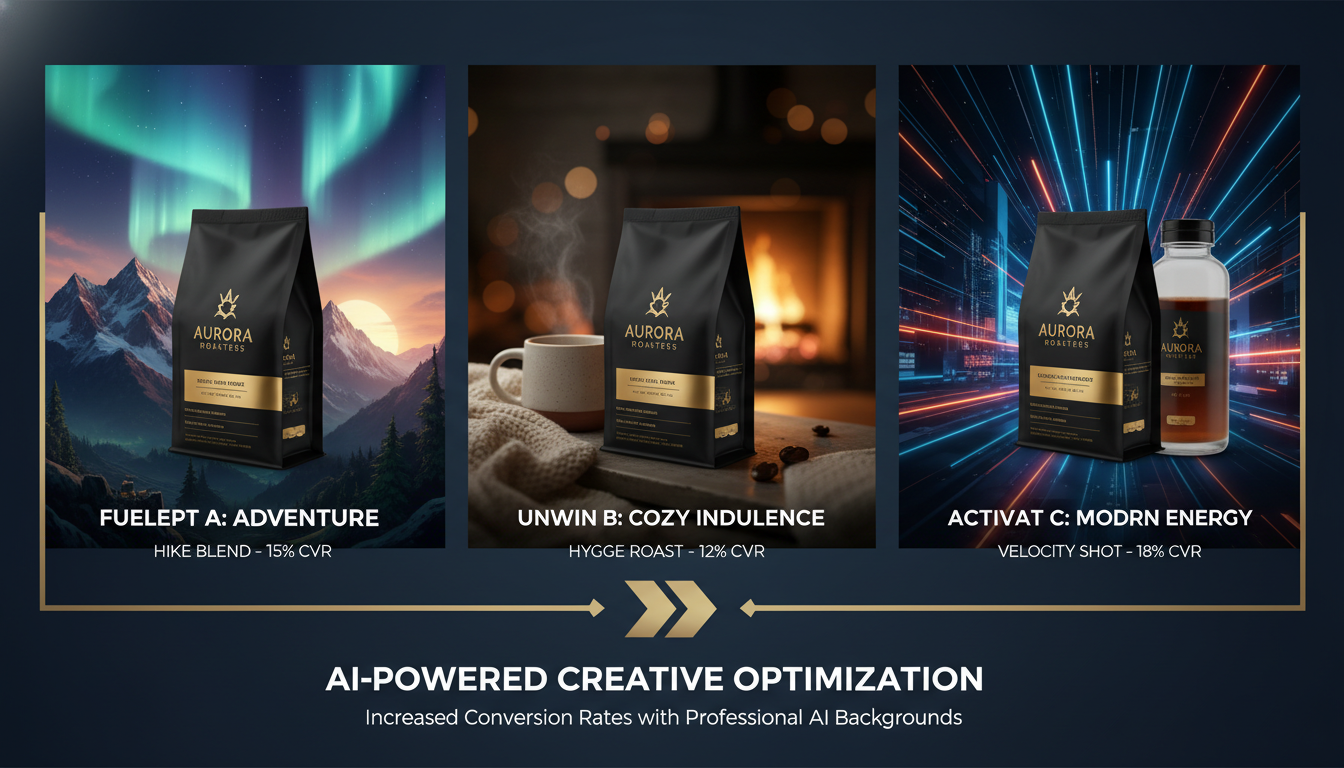
An ai ad creator can instantly generate hundreds of visually stunning, high-converting product variations optimized for Sponsored Brands and Sponsored Display placements. This ai powered ad creative platform tests different backgrounds, copy hooks, and visual callouts, continuously serving the top-performing creative variations to your target audience. Rather than relying on gut feelings, your creative optimization becomes a structured, data-driven science. If a specific lifestyle background converts 2x better during weekends, the AI recognizes this pattern and dynamically adjusts your creative delivery, securing a powerful competitive advantage.
5. Master Multi-Channel Budget Fluidity
One of the biggest mistakes Amazon sellers make is keeping budgets rigidly locked inside specific campaigns. If your Sponsored Products campaign runs out of budget but your Sponsored Display campaigns have excess funds, your overall growth stalls.
To solve this, advanced marketing workflow automation systems pool budgets together across your entire Amazon store. If one high-performing ad campaign begins hitting its limit during a high-conversion surge, the software dynamically diverts capital from underperforming campaigns. This guarantees that your most profitable campaigns remain active, driving consistent, uninterrupted revenue throughout the day. It also ensures that unexpected demand spikes—such as a viral social media mention or a competitor going out of stock—are capitalized on instantly without manual intervention.
Supercharge Your ROAS with Autopilot AI Bidding
Discover the power of real-time, 24/7 campaign management. Eliminate manual guesswork and maximize your brand's Amazon scale.
Explore the Autopilot Platform →6. Shift Metrics from ACoS to True Profit per ASIN
While Advertising Cost of Sales (ACoS) is a popular metric in any amazon ppc course, relying on it blindly can be incredibly misleading. A campaign might look highly optimized on paper with an ACoS of 15%, but if the product has low margins or high FBA return rates, you might actually be losing money on every sale.
An intelligent marketing management platform consolidates your advertising metrics with your raw manufacturing costs, FBA fees, returns, and shipping costs. This gives you a clear, real-time picture of your True Profit per ASIN. By managing ads based on net profit margins rather than arbitrary ACoS targets, you ensure that every ad campaign generates actual bottom-line growth. This profit-first approach prevents you from over-indexing on high-volume, low-margin products, steering your automated systems to scale the items that actually drive financial health.
7. Accelerate Organic Lift with New-to-Brand Optimization
The ultimate goal of paid advertising on Amazon is not just to secure direct ad sales, but to improve your product's organic ranking. This organic lift is heavily tied to how effectively you acquire New-to-Brand (NTB) customers.
By deploying advanced AI advertising strategies, you can configure your bid software to prioritize search terms and audience segments that have a high likelihood of acquiring new customers. Since Amazon's search algorithm rewards velocity and customer acquisition, capturing NTB buyers signals to the platform that your listing is highly relevant, resulting in improved organic search rankings over time. This creates a powerful fly-wheel effect: paid ads drive NTB acquisitions, which push organic listings higher, generating free organic sales and lowering your blended customer acquisition cost.
8. Activate Smart Bid Buffers for Q4 and Prime Day Peak Periods
Peak shopping events like Prime Day, Black Friday, and Cyber Monday are chaotic battlegrounds. Competitors aggressively raise bids, and conversion rates spike dramatically. If you keep your standard bidding rules active during these periods, your campaigns will get instantly outbid and left behind.
Modern ppc campaign management software uses intelligent bidding buffers that automatically scale up bids when shopping volume surge is detected. These predictive models anticipate the spike in conversion rates and dynamically adjust bid targets, ensuring your products remain visible during the most lucrative shopping hours of the year. Once the peak event concludes, the system effortlessly dials the bids back down to protect your baseline margins. This prevents the disastrous post-holiday budget hangover, ensuring you extract maximum value from high-traffic events without overpaying during the cool-down periods.
9. Close the Feedback Loop with Conversational Intelligence
PPC campaigns do not exist in a vacuum. Product ratings, customer reviews, and listing optimization directly impact your advertising conversion rates. If your customer reviews highlight a specific issue, your conversion rate will suffer, causing your ad costs to soar.
By pairing your PPC software with conversational tools like AdAstraa’s EcomGPT, you can automatically extract buyer feedback from reviews, Q&As, and customer support tickets. If the AI detects recurring customer complaints about a specific product feature, you can quickly adjust your ad copy to clarify that detail or update your negative keywords. This powerful, self-healing loop keeps your product listings aligned with buyer expectations, drastically improving your ad relevance and overall ROAS. It bridges the gap between customer operations and ad performance, creating a highly unified e-commerce engine.
Case Study: How an FMCG Brand Saved 25 Hours Weekly and Cut ACoS by 38%
Let us look at a real-world example of how these automated systems work in practice. NaturaEssentials, a mid-sized wellness and skincare brand selling on Amazon US, struggled to manage over 150 ASINs across Sponsored Products, Sponsored Brands, and Sponsored Display campaigns. The marketing team spent roughly 25 to 30 hours each week pulling CSV files, manually updating bids, and attempting to design high-quality ad creatives.
Despite their exhaustive efforts, their overall ACoS hovered around 44%, and their daily budgets consistently ran out by mid-afternoon, causing a massive drop-off in sales velocity during peak evening hours.
By integrating AdAstraa’s comprehensive suite, the brand transformed its performance overnight: Autopilot took over 24/7 bidding, shifting the primary focus to high-intent micro-bidding; Shopper OS identified non-converting generic search terms and automatically reallocated budget to high-intent phrases; and AdCreative+ auto-generated dynamic ad visual creatives, replacing manual graphic design workflows.
Within just 60 days of transitioning to this modern marketing workflow automation, NaturaEssentials achieved the following breakthrough results:
| Performance Metric | Before (Manual Management) | After (AdAstraa AI Automation) | Percent Improvement |
|---|---|---|---|
| Weekly Management Hours | 28 Hours | 3 Hours | 89% reduction |
| Average ACoS | 44.2% | 27.4% | 38% reduction |
| Ad-Generated ROAS | 2.26x | 3.65x | 61% increase |
| Wasted Spend (Zero-Conversion Keywords) | $3,450 / month | $210 / month | 94% reduction |
By letting the machine learning software take over the manual heavy lifting, the brand’s marketing team was able to completely redirect their attention toward product sourcing and customer experience, knowing their campaigns were optimized 24/7.
How to Transition to Amazon PPC Automation: A Step-by-Step Roadmap
Moving from manual campaign updates to an automated framework doesn't have to be overwhelming. In fact, a step-by-step migration guarantees that your campaigns remain fully functional while the AI dials in its performance. Here is how to make the switch smoothly:
Phase 1: Consolidate Your Account Structure
Before enabling any smart ppc optimization software, clean up your keyword and campaign hierarchy. Remove duplicate match types within the same campaign, name your groups systematically, and ensure that only related ASINs are paired together. A clean data foundation allows the AI to discover patterns and optimize performance significantly faster. If the AI is fed messy, disorganized data, it will take twice as long to establish baseline performance metrics.
Phase 2: Set Strict Guardrails and Target Goals
A common fear is that automation tools will spend aggressively without control. To prevent this, define clear boundary parameters. Input your maximum comfortable bid ceiling, define your daily campaign caps, and enter your target ACoS or ROAS. These guardrails ensure the AI operates safely inside your financial boundaries. You remain in complete control of the overall strategy, while the automation platform handles the repetitive micro-optimizations.
Phase 3: Run a Parallel Testing Period
When you first activate an amazon ppc automation tool, let it run in 'learning mode' alongside your main campaigns. This allows the predictive algorithms to gather conversion data without immediately overwriting your existing campaign settings. You can monitor the system's bid recommendations first, building confidence in its predictive accuracy before handing over full bid control.
Phase 4: Gradually Transfer Creative Generation and Bids
Once the software has gathered sufficient historical data, systematically transition your primary campaigns. Start by automating your high-volume exact-match bids, then expand to auto-generate visual variations with your ai ad creator, and finally enable automated target harvesting. This progressive adoption minimizes risk and ensures smooth integration across your entire team. This progressive transition is guaranteed to reduce wasted spend while maintaining strong organic momentum.
For an extensive deeper look into setting up campaign architectures, check out our comprehensive Amazon PPC guide. By moving systematically through these phases, you will minimize disruptions and quickly unlock the massive benefits of hands-off campaign management.
Conclusion: Reclaim Your Time and Scale Safely
Managing Amazon ads campaign structures manually is no longer a viable strategy for brands aiming to scale. With ad costs rising and listing competition stiffer than ever, deploying an advanced ai advertising platform is the ultimate differentiator.
By implementing these 9 proven tips—from hourly micro-bidding to intent-driven targeting and creative automation—you can instantly cut ACoS, maximize true profitability, and reclaim valuable business hours. Stop letting manual ad management eat away at your hard-earned margins.
Stop Wasting Budget. Reclaim Your Margins Today.
Join the elite Amazon sellers scaling their true profit with AdAstraa's automated bidding, intent tracking, and AI creative generation.
Get Started with AdAstraa Now →Additional Resources
To further deepen your knowledge of machine learning and retail media advertising, explore these authoritative external resources:
- Statista: Amazon Advertising Revenue Worldwide — Official data tracking the massive growth of Amazon's global advertising share.
- Amazon Advertising Blog — Official industry updates, announcement logs, and strategic updates straight from Amazon.
- Harvard Business Review: How AI Is Changing Advertising — Academic analysis of machine learning's disruptive role in retail media and bidding.