
7 Proven AI Advertising Strategies to Instantly Dominate Amazon PPC Optimization
The Amazon e-commerce landscape has reached a critical tipping point. In recent years, cost-per-click (CPC) rates have climbed steadily, forcing brands to navigate an environment where operating margins are razor-thin. If you are still relying on manual bid updates, standard spreadsheets, or outdated rule-based legacy software, you are likely wasting a massive portion of your daily budget on non-converting search terms. To win today, brands must pivot from slow, manual adjustments to real-time, algorithmic automation.
Implementing advanced ai advertising strategies is no longer just an optional competitive advantage—it is an absolute necessity for survival. Leveraging artificial intelligence allows Amazon sellers, direct-to-consumer (D2C) brands, and digital agencies to scale campaigns, eliminate ad spend leakage, and drastically improve return on ad spend (ROAS). This guide breaks down seven proven, highly effective artificial intelligence-driven techniques to help you master Amazon PPC optimization and secure lasting market dominance.
- 1. Why Traditional Amazon PPC Management is Failing
- 2. Strategy #1: Continuous Autopilot Bidding with AI PPC Optimization
- 3. Strategy #2: Semantic Keyword Harvesting and Negative Match Automation
- 4. Strategy #3: AI-Powered Ad Creative for Dynamic Click-Through Uplift
- 5. Strategy #4: Intent-Driven Customer Segmentation and Targeting
- 6. Strategy #5: Real-Time True Profit Analytics vs. Vanity Metrics
- 7. Strategy #6: Dynamic Dayparting and Peak Conversion Scheduling
- 8. Strategy #7: Cross-Channel AI Marketing Strategies for External Traffic
- 9. Real-World Case Study: How a Leading Brand Cut ACoS by 34%
- 10. Comparison: Legacy PPC Tools vs. Next-Gen AI Platforms
- 11. Additional Resources
- 12. Conclusion & Next Steps
Ready to stop wasting precious ad spend?
Discover how AdAstraa's comprehensive AI suite automates your bidding, optimizes your campaigns 24/7, and increases profit margin effortlessly.
Explore AdAstraa Autopilot Instantly →
1. Why Traditional Amazon PPC Management is Failing
For years, the standard approach to amazon ppc management revolved around rule-based triggers. A seller would configure rules such as: "If a keyword's ACoS exceeds 40% over 14 days, lower the bid by 10%." While this method was better than manual guessing, it is fundamentally flawed in today's high-speed auction environment. Rule-based systems are reactive, rigid, and blind to broader context.
First, they ignore bid elasticity. A rigid rule might drop a bid so low that your product completely loses placement on page one, causing traffic and overall organic ranking to collapse. Second, they struggle with data attribution delays. Amazon can take up to 72 hours to fully attribute sales to pay-per-click clicks, meaning a rule run today might act on incomplete or inaccurate data.
Modern e-commerce requires a transition to intelligent marketing automation using ai. Instead of static, hardcoded rules, self-learning algorithms analyze thousands of contextual data points continuously. These systems predict conversion probabilities and dynamically adjust bids hourly, protecting your margins while seizing critical high-converting sales opportunities.
2. Strategy #1: Continuous Autopilot Bidding with AI PPC Optimization
The primary foundation of elite amazon ppc optimization is automated bidding that operates 24/7. Manual bid management is restricted by human working hours. While you are asleep, competitors may bid aggressively, or search trends may shift, causing you to lose prime real estate or overpay for underperforming clicks.
Machine learning models solve this problem by continuously assessing market trends. Rather than updating bids once a week, an AI-driven bidding system recalculates optimal bid positions throughout the day. By looking at historical click-through rates (CTR), seasonal patterns, conversion history, and inventory levels, the algorithm places highly precise bids on every target.
This automated precision prevents overbidding on highly competitive terms where conversion probability is low. Conversely, it identifies low-competition, high-margin opportunities and raises bids slightly to secure dominant placements, boosting your overall organic search presence. To understand the deep mechanics behind this real-time optimization, explore our in-depth AI advertising overview.
3. Strategy #2: Semantic Keyword Harvesting and Negative Match Automation
Your Amazon PPC campaigns are only as healthy as your keyword targeting. Many brands bleed thousands of dollars monthly by bidding on keywords that attract high clicks but zero sales. Simultaneously, discovering profitable new search queries is incredibly time-consuming when done manually via search term reports.
An advanced ai ad generator and keyword harvesting engine works continuously to resolve this bottleneck. Utilizing natural language processing (NLP), the algorithm reads your customer reviews, competitor listings, and historical search term reports to identify high-intent search terms. It then automatically maps these terms into your exact-match campaigns.
Equally important is the automatic identification of negative keywords. Instead of waiting for a search query to spend fifty dollars without a conversion, predictive AI models evaluate click patterns. If a search term mirrors historical failing search behaviors, the platform instantly marks it as a negative match. This defensive strategy saves significant portions of your ad budget, which can be reallocated to proven winners.
4. Strategy #3: AI-Powered Ad Creative for Dynamic Click-Through Uplift
Great targeting and bid math mean very little if your creative fails to capture attention. Amazon's search results page is incredibly crowded. Sponsored Brands and Sponsored Display ad formats require high-quality imagery, engaging headlines, and customized lifestyle assets to stand out from the competition.
Producing these assets traditionally requires expensive design teams, slow feedback loops, and extensive resources. This is where an ai powered ad creative suite changes the game. By automatically analyzing high-performing visual layouts and language patterns in your category, AI tools can generate dozens of high-converting graphic variations in seconds.
Using an automated ad creator ai allows your marketing team to rapidly split-test lifestyle backgrounds, promotional text, and calls to action. By constantly rotating and testing variations, you avoid creative fatigue, improve click-through rates, and find the perfect messaging that resonates with specific customer segments. Read more about deploying these assets via AdCreative+ to elevate your visual marketing strategy.
Stop designing creatives manually.
Transform your Amazon product images into stunning, high-converting lifestyle ad creatives with AdCreative+ in just a few clicks.
Generate High-Converting Creatives Now →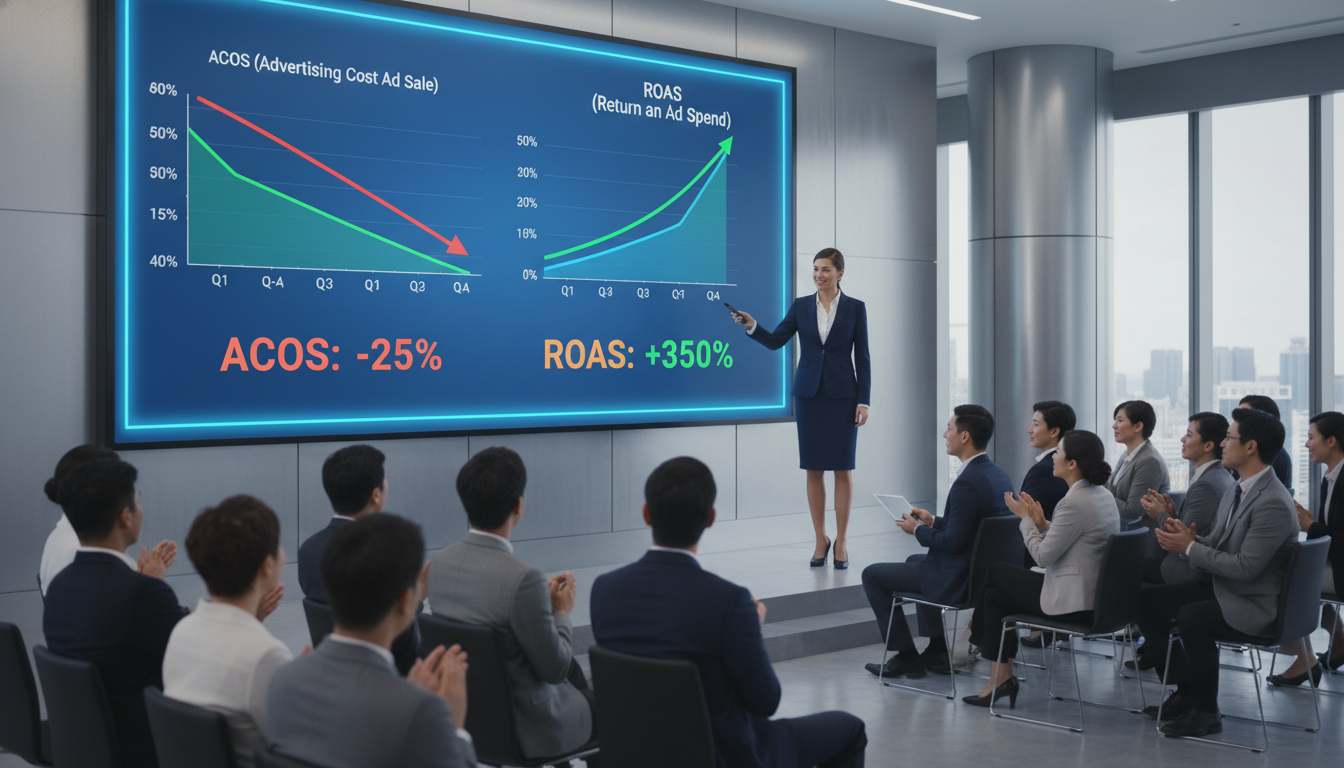
5. Strategy #4: Intent-Driven Customer Segmentation and Targeting
Not all shoppers browsing Amazon are at the same stage of the buying funnel. Some are merely researching products, while others are ready to purchase immediately. Treating these cohorts identically leads to massive bid inefficiencies and inflated acquisition costs.
Next-generation ai based marketing automation monitors historical buyer intent indicators to segment audiences accurately. It analyzes behaviors such as repeat purchase history, brand search volume, and product-comparison frequency to determine conversion probability.
By connecting your campaigns to specialized systems like buyer intent intelligence (Shopper OS), you can adjust bids dynamically based on customer intent. For a high-intent, returning shopper, the platform bids aggressively to ensure a competitor doesn't steal the sale. For a top-of-funnel window shopper, the system lowers the bid to prioritize affordable brand awareness over costly, immediate conversions.
6. Strategy #5: Real-Time True Profit Analytics vs. Vanity Metrics
Advertising Cost of Sales (ACoS) and Return on Ad Spend (ROAS) are the standard benchmarks in Amazon advertising. However, these figures can be highly deceptive. An advertising campaign might boast an impressive 15% ACoS, but if that product has high storage fees, expensive return rates, or a low gross margin, you might actually be losing money on every sale.
Advanced marketing analytics ai integrates with your overall Amazon seller account data, incorporating Cost of Goods Sold (COGS), FBA fulfillment fees, storage fees, refunds, and ad spend. By organizing this data in real time, the software calculates "True Profit" down to the individual ASIN level.
When your bid optimization algorithm accesses true profit margins instead of simple ad sales, its decision-making paradigm shifts completely. It reduces bids on unprofitable products—regardless of how low their ACoS is—and aggressively channels ad budget toward items that drive actual net profit into your business. Check out our E-commerce resources to learn how top sellers manage their unit economics using predictive analytics.
7. Strategy #6: Dynamic Dayparting and Peak Conversion Scheduling
Sellers often assume their product converts equally at all hours of the day. In reality, purchase behavior is highly cyclical. A home office supply product might convert exceptionally well between 9 AM and 5 PM on weekdays, but see conversion rates fall off a cliff on weekend evenings.
Legacy systems utilize manual dayparting, turning campaigns completely on or off at fixed times. This raw tactic harms search engine rankings and results in lost sales. Instead, an AI-powered advertising software platform utilizes historical conversion data to map out detailed, hour-by-hour performance curves.
Rather than turning campaigns off entirely, the platform dynamically scales bids up or down throughout the day. It maximizes visibility during peak conversion windows and conserves budget during historically slow hours. This ensures you are never wasting capital on low-intent clicks, keeping your overall daily budget highly efficient.
8. Strategy #7: Cross-Channel AI Marketing Strategies for External Traffic
Amazon's organic ranking algorithm highly favors products that drive high-quality external traffic to the marketplace. Directing external shoppers from channels like Google Search, Meta Ads, and TikTok to your Amazon product listings signals strong brand authority, leading to explosive organic ranking gains.
Executing successful cross-channel campaigns manually requires managing multiple ad platforms, pixel tracking setups, and attribution challenges. Implementing ai marketing strategies that link cross-channel networks allows you to automate this workflow. AI tools track external ad performance and automatically balance budgets across platforms to optimize overall customer acquisition costs.
Furthermore, because Amazon provides incentives through its Brand Referral Bonus (which can return an average of 10% of qualified external sales back to the brand), automating off-Amazon traffic is an incredibly cost-efficient growth vector. A unified marketing management platform takes the guesswork out of external campaigns, driving highly relevant traffic straight to your Amazon store with zero manual oversight.
9. Real-World Case Study: How a Leading Brand Cut ACoS by 34%
Case Study: Aura Cosmetics Scales Profitably with AI Automation
Aura Cosmetics, an established beauty brand selling on Amazon US, struggled with rising CPC costs across their competitive category. Despite manual daily optimization, their average ACoS hovered around 44%, severely eating into their product margins. They found themselves unable to scale without losing money.
Aura integrated AdAstraa’s all in one advertising platform to handle their campaign management. The system instantly mapped their product listing data, launched autopilot bidding, and deployed automated negative keyword matching. Within 60 days of implementing these advanced AI advertising strategies, Aura achieved spectacular results:
- ACoS Reduction: Dropped from 44% to an efficient 29% in under two months.
- Ad Spend Efficiency: Eliminated over $12,000 in monthly wasted spend on non-converting search terms.
- Organic Ranking Boost: Conversion rate improvements led to a 38% climb in organic sales.
- Time Saved: Saved the brand's internal marketing team over 25 hours per week in manual bid management.
10. Comparison: Legacy PPC Tools vs. Next-Gen AI Platforms
When selecting your next e-commerce toolkit, it is essential to understand how next-generation AI platforms differ from standard legacy software tools.
| Feature / Capability | Legacy PPC Rule-Based Tools | Next-Gen AI Platforms |
|---|---|---|
| Bidding Engine | Rigid, user-configured rules (If/Then) | Continuous, predictive machine learning models |
| Execution Frequency | Daily or weekly execution cycles | Real-time, 24/7 hourly dynamic updates |
| Keyword Discovery | Manual harvesting from reports | Automated NLP semantic keyword matching |
| Optimization Focus | Vanity metrics (ACoS, click volume) | Bottom-line business health (True Net Profit) |
| Creative Testing | Manual uploading and slow review | Dynamic generative AI creative generation |
11. Additional Resources
To help you continue mastering Amazon advertising, market trends, and modern AI e-commerce strategies, explore these highly authoritative external resources:
- Amazon Ads Official Blog — Insights, updates, and best practices directly from the Amazon advertising team.
- Harvard Business Review — Research and analytical perspectives on AI's shifting role in modern digital marketing.
- Statista E-commerce Analytics — Comprehensive market data tracking Amazon global sales and ad spending patterns.
12. Conclusion & Next Steps
Success on Amazon no longer belongs to the sellers who spend the most time tweaking spreadsheets. It belongs to the brand builders who design smart workflows, align their pricing and creative dynamically, and trust artificial intelligence to handle the heavy math. By automating repetitive bidding, executing intent-driven segmentation, and shifting focus from deceptive vanity metrics to actual net profit, you can lower ACoS and achieve sustainable, organic growth.
The transition to AI-driven advertising does not have to be intimidating. By implementing these seven strategies step-by-step, your business can reclaim lost resource hours, minimize ad spend waste, and scale your operations effortlessly. Stop allowing manual tasks to hold your brand back.
Dominate Your E-Commerce Market Today
Don't let competitor brands out-optimize you. Leverage AdAstraa’s powerful, all-in-one AI operating system to instantly automate campaigns, lower ACoS, and boost your True Profit.
Book a Live Strategy Consultation →